Blog

Day 22 – Angels on Mountaintops by Holley Cornetto

Angels on Mountaintops (from B is for Beasts)

Holley Cornetto

The hot summer sun beat down on the back of my neck as I stood surveying the single file line. The girls ranged from eight to twelve years old.  We all had our favorites, of course, along with a couple that no one wanted in their group. I glanced at the clipboard in my hand. “Keisha, Sammy, Amber, and Riley, you’re in the red group with me. Come take your bandanas.”

The girls stepped forward, looking hesitantly at one another. Sammy was the wild card in this group. She was new at camp this year, and most of the others kept their distance from her. I’d noticed her a few times, collecting feathers and stones and putting them into the pink fanny pack she wore around her waist. I hoped that, by taking her under my wing, I could help her fit in with the others. I handed each girl a red bandana. “Do you have your bags ready?”

“Yes, Miss Elena,” Amber answered. She was an overachiever, which made her good to have along. Amber liked rules, and she especially liked making sure other people followed them.

From the corner of my vision, I saw my Aunt Celia jogging towards me. “Elena?” she called.

“Yeah?”

My aunt Celia ran Star Lake Christian Camp, which guaranteed me a summer job through high school and college. She took pride in running the camp, which had started as an extension of the church my uncle pastored, but had grown in popularity over the past few years, bringing in kids from all over the area.

“I’ve hired a new counselor. I want her to join your group for this outing so you can show her the ropes, okay?”

I rubbed the inside of my palm with my thumb. “It’s weird being here without Abby.”

Aunt Celia frowned. “We’ve talked about this, Elena. You can do this. I need someone to train Miranda, and since you’ve been here the longest, I think it should be you.”

I nodded. “I… I guess I can.”

“Great.” She smiled and patted my shoulder. “I’ll have her meet you at the van.”

***

I could feel the AC blasting out the van’s back doors. This summer was shaping up to be another full of record setting temperatures. Miranda helped stack the bags into the van.

I leaned against the door, handing her another pack. “So, what brought you to Star Lake?”

She shrugged. “I need the money. You know, for college and stuff.” Miranda was all braided blonde hair and freckles, pretty in that small-town sort of way. It wasn’t her fault my aunt had saddled me with her, but I wasn’t thrilled with the idea of a multi-day trip into the woods with four kids and a complete stranger.

“Oh yeah, what do you study?”

“Early childhood ed. I want to work with kids. Maybe teach one day.”

I nodded. “Well, you’re in the right place, then. I’ve worked with most of the girls in this group before. They are a good bunch but keep an eye on Riley. She can be a bit of an instigator, if you know what I mean.”

She nodded. “What about you? Are you in school?”

“I was. I’m just, you know, taking a break for now.” I rubbed the inside of my palm with my thumb and took a deep breath. It would be fine. Everything would be fine. “I’ve worked here five years. The lady that hired you? She’s my aunt.”

She grinned, stacking the last bag into the back. “That must be nice.”

“It’s why I got the first pick of the groups.” I pushed the door shut.

“How do they decide who gets what activity?”

“We rotate. It just so happens that we got hiking and camping first. Lucky us, huh?”

We climbed into the van and sat behind the driver. After a headcount, we headed for the campgrounds.

***

After we unloaded, Miranda and I herded the girls into a circle. We were at the trailhead of a path that led up a ridge on the mountainside. The trip was a four-day hike, with a new campsite each evening.

Miranda checked each girl’s supplies while I unfolded the trail map. “All right, does everyone have a compass and whistle handy?” It was a formality, mostly. The group was always together; the likelihood that they would need their own compass or whistle was low, but the motto whispered among Star Lake Camp counselors was ‘Better safe than lawsuit.’

“Okay, ladies. We’re gonna hike up the ridge to the campsite. We’ll make camp there. It’s important that we stay together. There are snakes and bears and all sorts of things in the forest. It can be dangerous if you don’t know what you’re doing. Counselor Miranda has our food and cooking supplies, and I have the first aid kit. Do you understand?”

Keisha stepped forward, hand raised.

“Yes?”

“What if we need to use the restroom?”

Riley giggled, tossing her ponytail over her shoulder, “Then you’d better watch out for poison oak!”

I shook my head, suppressing a grin. “Miranda has a roll of toilet paper. No itchy butts for anyone.” The girls giggled. No matter how old they got, at least butt jokes were still funny.

“Okay, I’ll walk up front and the four of you– wait, where’s Sammy?” I turned to look behind me. Shit, less than fifteen minutes and I’d already lost a kid. This was why I needed a partner I could count on. Abby wouldn’t have let this shit happen.

I cupped my hands around my mouth. “Sammy?”

“She’s so weird,” Riley whispered loudly to the others.

I sighed and turned to the troop. “We don’t talk about each other like that. She may be different, but that’s okay. It’d be pretty boring if we were all exactly the same.”

Gravel crunched near the trailhead, and I turned to see Sammy, holding a pale blue feather in her hand. “I’m sorry. I found this and I wanted to look it up in my book.” She held up a pocket-sized field guide to birds.

“Weird,” Riley whispered again.

Miranda shushed her. Maybe she would be helpful after all.

“It’s okay, Sammy, but from now on, we stay together. If you see something you want to look at, let us know. Maybe we can all learn something about birds together, okay?”

Sammy nodded.

“Okay ladies, let’s move out!” I said, and we began our ascent of the ridge.

***

The first day’s hike was one the shortest on our route. It was designed this way so that we had ample time at the first site to practice setting up camp, complete with bonding time in the evening. It was all a part of Star Lake’s mission to foster community among Christian youths.

The campsite was a clearing surrounded by dense forest. We were at a pretty high elevation, and a stream flowed about twenty feet away. The scent of pine needles baking in the summer sun reminded me of summers past. Abby had loved the smell of pine.

I missed her. I knew I was supposed to be moving on, but how could I when everything about Camp Star Lake reminded me of her? The weight of her absence pressed heavily upon me. A constant burden.

Where I was timid and prone to anxiety attacks, Abby had been fearless. I used to be terrified of these overnight camping trips. Afraid that I’d get lost, or one of the girls in my care would get hurt. We seemed so far away, out there under the wide-open sky, that anything could happen. Abby had always been there to reassure me, and now that she wasn’t, I felt those old fears starting to creep back in.

“Elena?” Miranda was looking at me. She’d asked something, but I didn’t catch what.

“Sorry. I was… thinking. What’s up?” I crossed my arms over my chest.

“I was asking if you wanted us to start the fire now, or wait until the sun is setting?”

“Better to do it after the tents are up.” I rubbed my palm absently. “I’ll start looking for wood while you help the girls finish the tents.”

It was against the rules. No one, not even counselors, were supposed to leave the campsite alone. But Miranda was new, and either didn’t know the rule, or wasn’t confident enough to call me out on it.

 “Okay. Take your compass and whistle, just in case.” She smiled sheepishly.

“Try not to let any of them wander off this time.” I cringed. The words carried a sharpness I hadn’t intended. “I’m sorry. I shouldn’t have said that.”

Her smile faded, and I saw my words had injured her. “Yeah. Of course. I’ll keep an eye out while you’re gone.”

I ducked into the copse of trees that ringed the campsite. After hours of trudging through the forest listening to the girls bicker and giggle and gossip, I needed a moment to myself, rules be damned. I’d apologize to Miranda later. I’d been unfair. It wasn’t her fault that Abby was gone.

The forest was a mix of old and new growth. Random ditches and fragments of old stone walls lingered like ghosts, hints of the life that used to exist here. It seemed a random place for a settlement, but the hills were full of vanished mining camps.

After I’d collected as much wood as I could carry, I started back for camp. The sound of leaves and twigs snapping under my feet seemed to fill the forest around me. That wasn’t right. It was loud, I realized, because there were no other sounds. At all.

I froze.

“Hello?”

A twig snapped behind me, and I spun, dropping the wood.

My heart threatened to pound straight through my shirt. “Is someone here? Miranda?” Stupid. I knew it wasn’t Miranda. She wouldn’t leave the girls alone.

A screech broke through the silence, a high-pitched sound somewhere between a dove’s coo and the squeal of rusty hinges. It was unlike anything I’d ever heard. I backed up against a large oak, my breathing shallow. I was trembling.

I was being irrational. It was a panic attack. All I heard was some weird bird – maybe a hawk or something. No reason to freak out.

A panic attack. Just another panic attack.

A twig snapped, and I nearly jumped out of my skin.

“Miss Elena?” Sammy stepped out from behind the shelter of a pine tree.

“Sammy! You scared the crap out of me. What are you doing out here? Was that you making that sound?” I was gulping in air, trying to fight down the rising terror.

“I was looking for feathers.” She held up a bundle of sticks and twigs, knit together by twine and feathers. Shaped like… a ladder?

“What is that?”

She frowned and looked at her feet.

“Sammy?”

Her answer was hesitant, barely more than a whisper. “And he dreamed, and behold a ladder set up on the earth, and the top of it reached to heaven: and behold the angels of God ascending and descending on it.”

“You were building a ladder for angels?”

She nodded.

I sighed. “You shouldn’t have left camp. Miranda is probably scared shitless.”

“You shouldn’t say ‘shitless.’ The angels don’t like it when you say bad words.”

“Well, you can tell the angels I said I’m sorry. Come here and help me carry this wood back to camp, okay?”

She nodded and together we headed back.

***

Miranda was pacing around the fire. When she saw us bushwhacking our way back to camp, she ran out to meet us. “Oh my gosh, Elena, I’m so sorry. I was helping Keisha with her tent. I turned my back for two seconds, and Sammy was gone.”

Amber sat on a log by the empty fire pit. “I told her it was against the rules to leave the camp alone. I told her, but she didn’t listen.”

I sighed. “It’s fine. No harm done.” I dropped the wood and turned to Sammy. “You can’t keep wandering off like that. You could get lost, or hurt…”

She dragged the toe of her boot in the dirt. “I thought I heard the angels. I was going to find them.”

Oh boy, I’d picked the crazy kid for my group. Freaking fantastic. “Angels?”

She nodded.

I could hear Riley giggling from behind her tent.

I clapped my hands together. “Okay, everyone. We’re going to start a fire and make some dinner. After we eat, we’re going to have a sharing circle.”

“Lame,” Riley said, approaching the fire pit. “We should play truth or dare instead.”

“Maybe tomorrow night. We always have a sharing circle on the first night. It’s how we get to know each other. And we have two new people in our group.”

Riley groaned dramatically.

I grinned. “Don’t worry, you’ll live.”

***

The fire crackled and popped, burning low. The stars were out in full force. Out here, in the middle of nowhere West Virginia, the sky seemed boundless. It made me feel my own insignificance, a small speck of life, spinning on a rock in the middle of the universe.

Abby had loved the stars.

I jumped as pots and pans clanged together. Though it was only Miranda cleaning up, I was on edge. The terror I felt in the forest had followed me back to camp, clinging to me like a shadow even now. I shivered.

Sammy couldn’t have made that sound. It wasn’t human. And why had it been so quiet? Forests were never quiet, not in the middle of a summer afternoon.

Miranda cleared her throat.

I looked up and smiled. “Thanks for getting those. Okay, girls. It’s time we all got to know each other a little better.

“Those of you who’ve been here before know the drill. We all sit in a circle and share things about ourselves with each other. Will anyone volunteer to go first?”

Amber’s hand shot up. Riley rolled her eyes.

“Go ahead, Amber.”

“I’m Amber. I go to Weston school, and I get straight As. My teacher said my research paper about people’s biases towards insects was the best in the class, and she hung it up in front of the room.”

“Insects, huh?” I asked. “Why don’t you tell us a bit about what you learned?”

She grinned. “Well, people are trained to make certain associations with different types of insects. They believe that some are good, and others are bad. Like ladybugs are good, and wasps are bad.”

Keisha nodded. “That’s because wasps are nasty, and ladybugs are cute.”

“But wasps aren’t bad. They’re pollinators,” Amber continued, “And then, people think butterflies are good and moths are bad.”

“Wait, why are moths bad?” Miranda asked. “They’re like butterflies, just not as colorful.”

Amber shrugged. “Some people think they are bad luck. Like an omen, or something.”

I stood. “Very good, Amber. Why don’t we hear from someone new, next? Sammy, would you like to share with us?”

She stood slowly, unzipping her fanny pack. She reached inside and pulled out a feather, a coping mechanism, holding it as she spoke. “I’m Sammy. This is my first year at camp. I live with my grandma now, and she said I should come so I could spend time with other kids.”

“How come you live with your grandma?” Keisha asked.

I stood again. “Keisha, I don’t think–”

“No, it’s okay,” Sammy answered. “My parents went away.”

“They moved?” Keisha asked.

“No, my Dad used to take us on fishing trips, and we stayed at a cabin by the lake. One night, at the cabin, the angels came and took them both away.”

Angels. That explained what she’d said before. The poor kid wasn’t crazy, she was grieving, and someone must have told her the angel story to ease the pain of her loss. It was pretty common. When I first heard about Abby, people said all sorts of crazy things to me about her death. “She’s in a better place,” or “God called her home,” and all the other things people say to feel better when someone dies.

“I’m looking for them. If I find the angels, they’ll take me to my parents. We can be together again.”

I felt a sharp pang of grief. Someday, Sammy would realize that there were no angels to reunite her with her parents. Only death could do that.

Riley was less moved. “That’s just stupid. Angels don’t literally come and take people away. Your parents are dead, dumbass.”

“Riley!” I scolded.

“What? It’s true. This is why everyone thinks she’s weird. I’m just trying to help.”

“Okay, enough. I think that’s enough for tonight.”

Riley sulked. “But I didn’t get to tell everyone about the new iPhone I got for my birthday.”

“You didn’t want to share anyway,” I reminded her.

“Yeah, lame. Can we have our phones back now?”

I shook my head. “No, this trip is about unplugging and spending time in nature, and with each other. Phones all stay locked up until the trip is over.”

She huffed.

“All right, girls. Everyone to your tents. We’re going to get an early start in the morning.”

There were two tents, each large enough for a counselor and two girls. I’d decided to bunk with Keisha and Sammy, to keep an eye on Sammy. From her first disappearance to the strange sounds in the forest, a sense of dread loomed over this trip. Maybe it was just me missing Abby, but something felt wrong this time.

***

I woke with a start. I wasn’t sure what time it was, but something had woken me. A sound or movement. A sense of something wrong. I sat up in my sleeping bag and clicked on my flashlight. I shined the light across the tent, to the side the girl’s sleeping bags were on. Sammy’s was empty.

Damnit. Maybe she had to go to the restroom, but I was starting to get fed up with this kid wandering off. I unzipped my sleeping bag and slid my shoes on. I didn’t bother with socks.

I pulled back the flap of the tent and shined the light around the campsite.

“Sammy?” I asked in a loud whisper. “Are you out here?”

I took a few steps towards the fire pit and paused. Voices. Had she woken up Miranda, or the other girls? But that didn’t make sense. Why would she wake them and not me?

Another step. Two more. Not voices. Voice. One voice. It was Sammy. She was singing.

I stepped slowly, trying to make as little noise as possible. I could see her now as my eyes adjusted to the moonlight. I clicked off the flashlight.

She stood under the open sky, her hands extended upward. She wore a white nightgown that reached to her feet, dirt-caked at the hem. Her tiny body swayed as she sang, the words coming into focus:

“Oh, come, angel band,

Come and around me stand;

Oh, bear me away on your snowy wings

To my immortal home.”

I circled around, afraid I’d startle her if I approached from behind. “Sammy?” I hissed. “Sammy, what are you doing out here?”

Her eyes were rolled back into her head. She stared with those white, blank eyes.

Shit. She’s having a seizure. I sprinted forward and took hold of her shoulders. “Sammy?!” I screamed into her face. “Sammy! Snap out of it!”

I heard rustling from the tents as the others woke to the sound of my shouts. They rushed to the edge of the clearing.

Miranda got there first. “Elena? Sammy? Are you okay?”

“She’s having some sort of seizure!” I turned back to face Sammy, who blinked and stood staring back at me.

She rubbed her eyes.

“Sammy, are you okay?”

She nodded. “Yeah. Why?”

By now the other girls had reached us and were standing around in a circle.

I shook Sammy a little too hard. “What were you doing out here?”

Miranda stepped forward. “Come on, let’s go back to camp.”

I looked up. “Did you see her eyes? They were…”

“She was sleepwalking, Elena. We should get the girls back to bed.”

I looked at the others. Riley was smirking, but Keisha and Amber both looked shaken, concerned. “Of course. Sorry. Let’s go, ladies. Nothing to see here.”

***

I spent the rest of the night sleeping in fits and starts. I dreamt of little girls having seizures and angels like monsters coming to carry them away while I screamed and pleaded. Sometimes the girls in the dreams had Abby’s face.

By the time I pulled myself from the sleeping bag in the morning, the water was already boiling, and Miranda was measuring out instant coffee powder. She handed me a mug.

“Thanks. You’re a saint.”

“Not an angel?” She lifted an eyebrow.

The tension of the last couple of days eased its grip on me, and I laughed. She winked and took a sip from her mug.

“Thanks for last night, Miranda. I know I didn’t exactly handle it well.” I looked down at my coffee.

“You know, they really should disclose things like sleepwalking on the medical release form. It’s kind of scary when you aren’t expecting it. It’s not the kind of thing that should be sprung on you in the middle of a camping trip.”

I grinned. She was letting me off easy. “Definitely not. And hey, I’m sorry if I’ve seemed… unwelcoming. It isn’t you, it’s just–”

“Your friend, Abby, right?”

I nodded. “How do you know about Abby?”

“Your aunt told me. She said not to mention her unless you brought it up.”

“Oh? What else did she tell you?”

“Not much. That she was your best friend. That it was an accident, and that this is your first summer back since it happened. That you might be a little…” She seemed at a loss for what I might be. That made two of us.

“I think I’m more than a little.”

She smiled and bumped me with her shoulder. “Don’t worry. I get it.”

I turned up my mug, letting the coffee scald the back of my tongue. “We should pack and get moving before the heat gets unbearable.”

***

The second campsite was further out and further up. Most of the second day’s hike was uphill, but it was a gradual climb. I hadn’t noticed just how high we’d climbed until an overlook or a clearing offered a scenic view. As we gained elevation, the large deciduous trees gave way to scraggly pines.

Amber stayed up front with me, followed closely behind by Riley, who took every opportunity to whine about her missing phone.

“You could at least let us check them before bed.”

“For the thousandth time, Riley, no phones, period.”

Keisha and Sammy hung back closer to Miranda. Normally I wouldn’t keep so far ahead, but Riley made snide remarks anytime Sammy was within earshot.

Next year, I was picking a different group.

We climbed up the hillside, one of the few places on the trail where it was too steep to walk up. When we reached the top, I turned and looked back. There was no sign of Miranda, or the two girls in her care. “Okay, ladies. Wait here a minute. Have a drink of water. I’m going to see how far back the others are. We might need to rest a minute and let them catch up.”

I spotted Keisha a little way back from the direction we’d come. I scrambled down to meet her, and offered a hand, helping her up the steep cliffside.

“Where are Miranda and Sammy?”

She was panting. “Back a little. Sammy kept stopping.”

“Is she tired?”

Keisha shook her head, taking in a deep breath. “No, she was leaving a trail of feathers.”

“She what?”

“You know the feathers she collects? She was leaving them on the trail so the angels would be able to find her.”

I sighed. “Thanks, Keisha. I’ll go find them. Why don’t you go join Amber and Riley at the top?”

She nodded and placed her hand on the next rock, pulling herself up.

“Oh, and Keisha?”

“Yeah?”

“Maybe don’t tell them about Sammy’s feathers.”

“Sure thing, Miss Elena.”

***

Between the heat, the climb, and Sammy’s feathers, it was dusk by the time we made camp.

I coaxed the fire to life and took a seat beside Miranda. I’d decided to be kinder to her, especially after last night. I’d lost my cool, and she’d proven good in a crisis. I rubbed the inside of my palm with my thumb. It was okay, no real harm had been done. I still felt like an ass for the way I’d reacted, though.

The girls were clustered in a circle around the campfire. Keisha looked over at Miranda and me. “Can we tell scary stories?”

Officially, we were supposed to discourage this type of behavior. We were supposed to encourage the girls to tell stories of encouragement and empowerment. All counselors received a packet with suggested topics to have the girls discuss in the evenings by the fire.

I didn’t have the energy, so I shrugged. Scary stories it was.

Miranda leaned in and whispered. “I don’t want to seem weird but…”

“But what?”

“I had this really strange feeling during the hike today.”

“Strange like what?”

“Like we were being watched.”

“The whole time?”

She nodded. “Kinda like we were being followed or something.”

“You didn’t see anyone, did you?”

She shook her head.

“Maybe it was just a bad feeling? Sammy spooked us all last night.”

She smiled nervously. “Yeah. You’re probably right.”

Amber was standing, waving her hands dramatically. “And when they shined the light in its direction, its eyes glowed like reflectors on a bicycle. A year later, it took revenge on the town. It made a whole bridge collapse!”

***

That night, Miranda offered to share a tent with Sammy and Amber. As a matter of policy, we rotated the sleeping arrangement so that all the girls got to spend time with each other. I wasn’t looking forward to the night Riley and Sammy shared a tent.

I tossed and turned in my sleeping bag. Faint noises crept into my dreams, doves cooing and rusty hinges creaking. I woke up in a sweat and kicked off my sleeping bag. When I reached for my water bottle, I saw a soft glow in the distance.

It’s probably Miranda or one of the girls going to pee, I told myself. I clicked on my light and checked the tent. Riley and Keisha were sound asleep. Not them, then.

I sighed. What if Sammy was sleepwalking again? I pulled on my boots and stepped out of the tent. I’d have sold my soul for a good night’s sleep.

Outside the tent, I could see the glow was multiple flickering lights. It was weird, and weird meant Sammy. Although I’d never admit it in front of the others, Riley was right. The kid had issues.

I felt a tickle on the back of my hand and brushed something away in the darkness. I walked closer. Sammy was standing in front of what I could only describe as an altar. It was an enormous slab of rock covered with a white cloth. Three votive candles flickered on top, emanating the smell of melted wax.

Another tickle, this time on my face. I slapped my cheek and pulled my hand away. A dead moth.

I glanced back at the altar. The votives were surrounded by moths, large and small, darting like suicide towards the flame. Strange as it was to see the cloud of moths with their pale white wings dancing with death, it was stranger still that Sammy knew how to build an altar and had packed her own supplies.

When she spoke, her voice was soft, like the flutter of the moth’s wings, “… out of the midst thereof came the likeness of four living creatures. And this was their appearance; they had the likeness of a man.

And every one had four faces, and every one had four wings.

And their feet were straight feet; and the sole of their feet was like the sole of a calf’s foot: and they sparkled like the color of burnished brass.

And they had the hands of a man under their wings on their four sides; and they four had their faces and their wings.”

I recognized the words, as if from a story I’d heard. No, not a story — scripture. She was quoting scripture.

 A rustling sound in the distance broke my concentration. As I turned in the direction of the sound, I glimpsed a silhouette among the stunted, man-sized trees.

I grabbed Sammy and ran back towards the camp. From behind us came the rustling of wings and a sound like the coo of a dove and the squeal of rusty hinges. Something dark circled overhead, blocking out the moon’s bright glow. By the time I got to the tent, Miranda was awake, coming out to search for Sammy.

“Get inside!” I hissed.

She looked behind us, wide-eyed. “What is…”

“Just get inside!”

She fastened the tent behind us. It wasn’t much protection, I knew, but it was better than being exposed, out under the open sky.

“What the hell is going on?” she shouted.

“The angels don’t like it when–”

“Shut up about the stupid angels, Sammy. This is serious!” I looked around the tent frantically. “Do you have the bag with the phones?”

Miranda nodded.

“See if you can get a signal. Someone’s out there. Sammy’s light must have attracted them.” I turned towards Sammy. “We told you not to wander off. What were you doing out there?”

She started sobbing. “I was calling the angels.”

“Sammy, I’m sorry about what happened to your parents, but angels are not coming to get you. You put us in danger, do you understand?”

“The angels won’t hurt us.”

I sighed. “Sammy, you have to stop this.”

Miranda stared at the phone’s screen. “Nothing.”

Amber sat up in her tent and rubbed her eyes. “What’s wrong?”

“Nothing. Sammy was sleep walking again. Everything’s okay. Go back to sleep.”

I exchanged glances with Miranda. “I’m going to look outside. To see if whatever it is has gone.” I took a flashlight and a whistle. At least if there was trouble, I could make enough noise to warn the girls.

“If someone is out there… following us… maybe we should just pack up and go.”

“We can’t hike down the side of the mountain in the dark. Someone will get killed.”

“Okay but be careful. If you see anything…”

“I’ll blow the whistle.”

She nodded, hugging Sammy against her chest. I could tell the whistle was as little comfort to her as it had been to me.

***

I crept over to the altar. The wind picked up and blew out the flame of the candles. Feathers, no doubt spread by Sammy, whipped around in the breeze. The moths were long gone. I picked up the candles and noticed a small Bible open on the altar. King James version. It seemed an odd thing for a child to carry around, but odd took on a new meaning as far as Sammy was concerned. I reminded myself to search her bag for matches later.

I stepped away from the altar and my boot crunched on something solid. I bent down and lifted a bundle of twine and sticks roped together in the shape of a ladder. I scooped it into my arms, along with the extinguished candles, the cloth, and the Bible. I’ll give the kid one thing; she was certainly determined.

When I got back to the tent, Sammy had cried herself to sleep in Miranda’s arms.

“No sign of anyone outside. Whoever or whatever it was seems to be gone now.”

“I sent Amber to your tent,” she whispered, cradling Sammy. “The crying was keeping her awake.”

“I think we should keep watch. Just in case there is someone out there, and they come back. Take Sammy and stay with the others. If I put the packs in the other, we should all be able to squeeze into one tent.”

She nodded.

“I’ll take first watch.”

Exhaustion was catching up with me. As I settled outside to watch, I thought I saw the silhouette of a giant bird circling overhead.

***

A scream pierced the peaceful predawn calm, startling me to attention. I’d fallen asleep during my watch. Apparently, Miranda had fallen asleep too, and failed to come relieve me of duty.

I rushed to Miranda’s tent. The door flap was ripped aside, and Miranda stood in front of it, screaming.

“Shit. Shit.”

“What happened?” I asked.

“I don’t know. I was with the girls. I fell asleep.”

I peered inside the gaping hole. “Oh God.”

“It’s our stuff…”

The packs were torn open. Their contents littered about, leading a trail out the back of the tent, where there was another gaping hole.

I looked back at Miranda. “How did we sleep through this?” Among the torn clothing and spilled supplies, there were markings in the dirt. They didn’t belong to any man or beast I could identify.

I was outside the tent. The girls and Miranda were inside the other. Someone, or something had done this intentionally, strategically. The thought, once formed inside my mind, was too horrible to contemplate.

By this time Riley, Sammy, and Keisha were standing around, surveying the destruction.

“We need to clean this up. We’ll salvage what we can and get moving.”

I rubbed the inside of my palm with my thumb. It would be okay. We would clean up and hike for as many hours as we were able. If we trekked from dawn till dusk, we could get to the rendezvous site ahead of schedule. It was a risk, but miles from nowhere, it seemed the only way out.

The girls started sorting through the litter. Miranda looked at me. “Elena?”

“Yeah?”

“Where’s Amber?”

***

I handed Miranda the only working phone we’d found among the debris. “Start walking. Keep checking for a signal. If you get one, call 911. If you see anyone, ask for help.”

“I don’t want to leave you here alone with the girls.”

“We can’t leave until we find Amber. The best thing you can do is get help.” I handed her a few of the granola bars and some jerky we’d managed to salvage. “Take the map, too.”

I felt a sharp pain in my gut as I watched her walk away.

“Miss Elena?”

I inhaled a deep breath, trying to maintain a semblance of calm. “Yes, Keisha?”

“We want to help look for Amber.”

“I know, sweetheart, but it is dangerous to wander away from camp. What if someone else gets lost?”

Outside the remaining tent, we’d piled all the supplies we’d managed to save. Keisha reached down and lifted a spool of twine. It was the twine that had bound together the sticks and branches, shaping the ladders Sammy built.

“Someone holds one end, and we tie the other end to the tree.” Keisha nodded to one of the scraggly pines just outside the clearing. “That way, we can find our way back.”

The ball of twine wasn’t long enough for us to explore very far beyond camp, but it at least it would keep them busy and let them feel they were helping. They were all worried. Even Riley managed to keep her whining and fault-finding to a minimum.

I kept Sammy with me. I didn’t want to risk her wandering off with the other girls. I feared they would leave her or get lost trying to follow her.

I rubbed my palm.

“Why do you do that, Miss Elena?” Sammy asked.

I smiled. “It’s an old habit.”

“You do it when you’re afraid, but you shouldn’t be afraid. The angels took Amber. She’ll be fine.”

The angels. It was insanity, but maybe she had seen something. “Sammy, will you tell me about the angels?”

She considered it for a moment, then nodded. “What do you want to know?”

“You said the angels took your parents, and now, Amber, too?”

She nodded again.

“Where do they take people?”

Sammy shrugged. “Paradise.”

I sighed. It was no use. The kid was suffering from some sort of delusion. A mental breakdown triggered by the death of her parents. She didn’t know anything.

After a moment, she looked up at me. “Do you hear that, Miss Elena?”

I opened my mouth to answer, and then heard the sound like the cooing of a dove and the squeal of rusty hinges.

Sammy grinned. “It’s the angels. They’re close.”

***

An hour had passed since Keisha and Riley’s last check in. They’d either found something, or something was wrong.

“Sammy, I think we need to go and look for Keisha and Riley.”

Sammy shrugged. “They’re with the angels now.”

I sighed and turned so she wouldn’t see me roll my eyes. If we got out of this alive, I was going to give my aunt a piece of my mind. This kid didn’t need camp, she needed a therapist.

“Let’s leave a note in case Miranda comes back. Maybe she’s gotten a cell signal by now.”

Sammy nodded.

Among our salvage was a half-torn Star Lake Camper’s Handbook. I ripped the back cover off and scribbled: Gone to find the others. Will return. ~E

I attached it to the outside of the tent.

Three girls. Three girls missing on my watch.

I picked up the twine and felt sick. It was slack. Nobody was holding the other end.

“Sammy, you go first. I don’t want you out of my sight.”

She nodded and led the way through the forest.

The twine twisted around the scraggly pine trees and through shrubs. I called until my voice cracked. “Keisha? Riley?” When we reached the end of the cord, there was nothing. It lay on the ground, abandoned. I slumped to the ground and sobbed.

Sammy leaned down beside me. “Don’t cry, Miss Elena. We’ll find the angels; they’ll take us, too.”

My face flushed with anger. “There aren’t any angels, Sammy. They don’t come and take people away. That isn’t how it works, so just shut up about stupid freaking angels!”

She looked stricken. She took two steps backwards, her lower lip trembling.

“I’m sorry, Sammy. I didn’t mean it, I–”

She didn’t wait to hear the rest. She turned and ran.

***

Everything hurt. My eyes stung from crying, my feet from walking, my throat from yelling.

“Sammy? Keisha? Riley? Anyone?”

I hadn’t gone back to camp since Sammy ran away. I couldn’t. I wandered around the forest, possibly in circles. I had no map, no compass. It was impossible to tell.

Every so often, I heard a noise like the cooing of a dove and the squeal of rusty hinges. Apart from my voice, it was the only sound in the forest.

Night fell, and still I wandered. I might have slept. If I did, I slept while walking. Not exactly sleepwalking, not as Sammy had done. But Sammy hadn’t been sleepwalking, and I’d known it. She was calling to them, to the angels.

My stomach rumbled. I found a bush with berries and swallowed a handful. A few minutes later I was bent over a shrub, vomiting. I wandered across a stream and bent down, gulping mouthfuls of water. I drank until my stomach ached, and then lay back beside the water, watching the night sky.

I heard a rustling sound and looked up. A large bird flew overhead. I remembered the bird circling the camp. No. Not a bird. The wings weren’t bird wings. There were no feathers.

I pushed myself up from the stream bank and ran after it. I kept my eyes towards the sky, tripping over roots and undergrowth, stumbling through the forest in the moonlight. It called out into the night. The coo of a dove and the squeal of rusty hinges.

I tripped and landed on my face in the dirt. I sat upright and looked to the sky, but whatever I had been chasing was gone.

I felt the ground, trying to find what had tripped me. My hand fell upon something stringy and slick, like clumps of wet hair. I pulled my hand away and saw it covered in blood. I scrambled backwards and screamed. A head.

At least it had been a head. One eye dangled half out of its socket, the other already gone. An ear was missing. The face was frozen in a scream of terror, gazing up at the sky. I realized with horror that I recognized the blonde hair. The long braid. Miranda.

I sobbed. Was I dreaming? Hallucinating? Those berries I ate, maybe they were making me see things. If mushrooms could do it, why not berries? My heart was racing. I felt myself hyperventilating. I pressed my eyes shut tight. This isn’t real, this is a panic attack. I am asleep at the camp. I fell asleep. I am going to wake up. I am going to wake up…

When I opened my eyes, I had to rub them twice before I believed them. The ground writhed all around me. Giant maggots squirmed across the most grotesque garden I’d ever seen – a garden of human heads, their bodies planted beneath the soil. Close to me were fresher ones, still fleshy and stinking of decomposition. Farther back, only skulls remained.

I forced myself to look at them. Miranda, Amber, Keisha, Riley… they were all here, faces all twisted in horror, all looking upward, all partially eaten.

But, not Sammy. One of the child-sized maggots slithered toward her, eager to feed. I launched myself at it, recoiling at the touch of its cold, slimy flesh. It stank of puss and rot. I swallowed down the bile in my throat and shoved.

It was futile. The thing wriggled through my grasp, intent on its feast.

I scrambled closer to Sammy and scratched the dirt with my bare hands to unearth her buried body. “Come on, I’ll get you out of here!” I flung dirt and pebbles in every direction.

Sammy didn’t look panicked, not even alarmed. Her face was serene. “Look, Miss Elena. Angels.”

A cry pierced the night. I looked up and saw the angel, all moth wings and glowing red eyes. It swooped down, blotting out the night sky.

The writhing thing bit down hard into my leg. Not a maggot, I realized. A caterpillar.

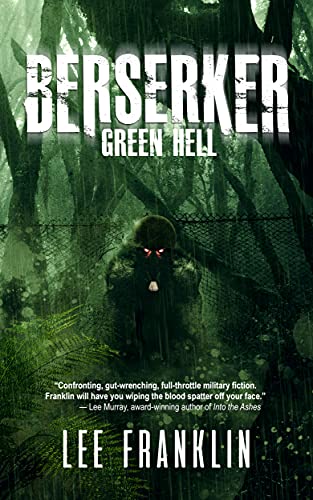
B is for Beasts is available for Kindle, in paperback, and on Audible here.

Holley can be found on Twitter and you can learn more on her website.

Look for her story “The Groom of Lorelei” in Don’t Break the Oath, coming October 31st from Kandisha Press.

Day 21 – Even in Darkness, We See Them by Megan Neumann

Even in Darkness, We See Them (from A is for Aliens)

Megan Neumann

Maddy lingered by Brady’s bedside, tucking in his covers a little too tightly. She didn’t want to leave his side, didn’t want to go to her own bed. As she leaned in to kiss his forehead, he reached out his hand and tugged on her sleeve. “There are men in my room at night,” he said, his voice low, his eyes steady and serious.

“Men?” Maddy asked. Alarm, followed quickly by amusement, went through her mind in seconds. Kids dreamed. The lines between reality and imagination blurred, especially in the darkness of night. She knew this better than most people. “You’ve never said anything about men in your room before.”

“I forgot until now,” Brady whispered. He furrowed his brow, and to Maddy he resembled a tiny old man, too wise and too thoughtful to be her six-year-old son. “But I remembered just now when you were standing over me. They come in there.” He pointed over Maddy’s shoulder. “Through the wall. Then they poke me. They pull my hair.” Brady’s eyes looked through her as if he could see the dream men over her shoulder. “I can’t move when they’re here. I don’t like it.” His voice started to rise. Maddy sensed his temper rising too. She placed her hands on his shoulder.

“Shh,” Maddy said. “There are no men. It was just a dream.”

He sighed. Maddy’s mother sighed the same way whenever Maddy said something particularly dense. Maddy rolled her eyes, the same way she did when her mother sighed at her.

“It’s not a dream, Mom!” he yelled, and Maddy knew nothing she could do would stop his fit. He would grab the sheets in his fists and kick the blanket, crying out for Maddy to leave, pleading for her to leave him alone forever, screaming about how she was hurting him.

Somehow, remarkably, he took a breath and looked up at Maddy with old man eyes, eyes with too much knowledge. How could she have a son so smart when her own life was riddled with dumb mistake after dumb mistake?

“I know it’s not a dream,” he said. “I saw them. Their bodies are made of static except for their teeth. Their teeth are like ours. They’re always smiling.”

“Static? With teeth? That can’t be real, can it?” Maddy tried to make her voice light, joking, so he’d know there was nothing to fear. “Sometimes dreams can seem real.” Maddy turned on the lamp on his bedside table. “They can look just like real life, but they’re not real. No one comes in here at night but me and your grandma.” She kissed his clammy forehead. “I can leave the lamp on if you get scared.”

“It doesn’t matter.” His voice was resigned. “Light or dark, it doesn’t matter.”

“How do you know?” Maddy asked, feigning curiosity. “Light makes scary things disappear.” She smiled, while lying through her teeth.

“Last time the lamp was on, and they were still here. It didn’t make them go away. They pulled out my hair.”

At these words, Maddy’s eyes widened. “Look at me.”

His gray eyes moved upward, gazing into Maddy’s own brown eyes. He wore a solemn expression.

“There are no men. I know you think it’s real, but it’s not.” She brushed Brady’s hair from his forehead. “You have to accept that.” She moved toward him and breathed in the smell of his shampoo. His downy hair brushed against her cheek. She wanted to hold him, but she knew he wouldn’t let her. In the last year, he started to hate hugs from his mom. He was too big now, he liked to say. Big kids didn’t hug their moms.

“Sometimes I have bad dreams too, and you know how I deal with it?”

“How?” For an instant, his voice was petulant, more like a six-year-old’s voice should be.

“I close my eyes and go back to sleep.” Maddy didn’t blink as she lied. “Can you do that?”

He nodded, and Maddy tightened the blanket around his body one last time before leaving him.

In their living room, her mother, Carol, lay across the sofa watching reruns of sitcoms. Carol liked the familiarity of the programs she’d seen dozens of times. Maddy couldn’t blame her. She too found comfort in knowing when to laugh and when to cry.

“That took longer than usual,” Carol said. “Didn’t have a fit again, did he?”

“No, thank God. But he’s having nightmares. Apparently, static men come into his bedroom at night. Static men with teeth.”

“Static men? That’s a new one. You used to have nightmares, remember?”

“I do.”

“His will pass. Just like yours did.”

Maddy said nothing. Her mother couldn’t see the pain on Maddy’s face because Carol still faced the television, the bright pictures lighting her features.

Should Maddy have told her mother the truth? No, she knew she shouldn’t. What good would the truth do in this family?

The nightmares never did go away. Instead, she learned to live with them. In the night, when she sweated through her sheets, her heart pounding, knowing someone was in the room with her, she would close her eyes and hope sleep would come again soon. But Maddy couldn’t tell her mother that. Carol would feel guilty, just as Maddy felt guilty over not saving Brady from his own nightmares.

“I’m going to bed,” Maddy said. Carol grunted in reply.

In the kitchen, Maddy took her sleeping pills and instantly a wave of relief rushed over her. It was impossible for the pills to take effect so quickly, but she felt an easy lightness upon taking the drug anyway. Maddy drifted in a daze to her bed, passing by Brady’s room, the light of his lamp shining beneath the door. She paused, pressed her body against the doorframe, and listened. No sounds. He’d always been a quiet sleeper.

Over the next few days Brady didn’t mention his nightmares again. His days passed as usual, a lonesome boy playing in his room. But there was something different about him. He seemed quieter. Was he growing paler and thinner? Some days he went to the backyard and played on a rusted swing set with only one swing and a slide that tipped to one side when he sat on it. Maddy knew she should get rid of it, but he loved the set so much. Besides, she couldn’t afford a new one.

As usual, when she’d leave for work, Carol would watch him. That weekend Maddy heard all about the tantrums during the week, his fits of selfishness or hatefulness toward his grandmother.

“He’ll grow out of it,” Maddy said. “He’s just a difficult boy.”

“He’s a problem. What are you going to do next year when he has to go to school?”

Maddy shrugged. “I’m sure there are other kids like him.”

Carol sighed. “They’ll kick him out of school. They’ll call you during the day to come get him if he kicks and bites and screams like he’s been doing. What will you do if they start asking questions about him?”

“What do you want me to do?” Maddy asked. Her mother knew she spent all her free time with Brady. She tried to make him good. Sometimes she worried he was unreachable, a distant star too far away or too hot for her to touch. No matter how hard she tried to grasp him, he eluded her. This distant boy would never be hers.

“You need to discipline him.” Carol crossed her arms and set her jaw.

“Like you disciplined me?” Maddy said this with more vitriol than she’d intended.

“Yeah, I brought the belt out more than a few times in your day, and you turned out all right.”

“Did I?”

Carol stared at her daughter, her eyes searching Maddy’s eyes. Maddy wondered how her mother could ever think she’d turned out all right.

“Single mother. Shit job. Shit house. Still living with my mom. Yeah, I turned out great. And it’s all because of your fine parenting. It’s your fault I even have Brady.”

Carol slapped her. Maddy’s face flew to the side, her cheek burning hot. She clutched her face and let out a small sob. She didn’t want Carol to see her crying, so she turned and watched Brady through the kitchen window. He’d climbed up the side of the swing set and had somehow made it to the top horizontal bar, straddling it with his feet dangling over each side. It wasn’t safe. He would fall and break an arm or worse. But Maddy didn’t want to be one of those parents who never let their kids get dirty or scrape their knees. She wanted him to learn on his own. Maybe she’d given him too much space. Maybe he’d learned too much. But he looked so happy.

“I did as much as I could with you,” Carol said quietly. “You’re doing as much as you can with him. We’re all doing our best with the lives we’ve chosen.”

“I didn’t choose this.”

As Maddy tucked Brady into bed again, she asked him if he still had nightmares.

“I don’t have nightmares,” Brady said matter-of-factly.

“You had a nightmare a few nights ago about men coming into your room. Remember?”

He pursed his lips. “Mom. I told you it wasn’t a nightmare.” He was so disappointed in Maddy’s stupidity. “But you didn’t believe me. You never believe me. Like when I told you about the lady from before—”

“Hush.” Maddy pressed a finger over his lips. “I told you she wasn’t real either. You’re still having nightmares, aren’t you? You’re still seeing the static men.”

He nodded. “I saw them last night. I’m used to them now. They don’t scare me.”

This surprised Maddy. How could he not be afraid?

“You’re not scared of the men who look like static?”

“They’re not really static. I looked at them closer. Their skin won’t hold still. It floats. But their teeth are normal. And they have no lips, so that’s why they’re always smiling.”

Maddy imagines this, and a chill rushes through her.

“Do they ever talk to you?”

“No. They like to watch me and touch my skin. I think they’re scientists.”

Maddy wondered how he even knew what scientists were. Or what static was. Then again, she remembered, he watched so much TV. He memorized everything. He probably knew more than she did.

“Why would they study you?”

“I asked them that, but they didn’t answer.”

Maddy couldn’t get the image of the static men out of her mind, so it didn’t surprise her when she dreamed about them that night. It didn’t feel like a dream, though. At first, she didn’t see them. A light emanated from the corner of the room. Then the light grew, moving closer. She couldn’t move her body. Their breathing sounded like rushing wind through leaves, growing louder till the sound was like a train. She wished she could scream, but her throat was closed.

They stood over her. Their skin moved over their organs like wisps of smoke, ever changing without feature except for their wide smiling mouths. Her heart thumped in her chest. Her fingers twitched. Her fingers were the only part of her she could move. But fingers were useless without moving hands and arms.

The static men moved their own hands in motions through the air and lights appeared before them. The lights blinked like camera flashes.

She must get up.

What if they were in Brady’s room too? What if they take him away from her?

She tried to move her arms again, but her limbs were heavy, too heavy to move. She struggled until she had lifted one arm, but the weight pulled it to the bed again.  She opened her mouth and started to scream, but the sound came out in a low croaking. Maddy wondered if this sound had actually come from her.

Screams erupted from somewhere in the house. Was it Brady’s room? Maddy couldn’t turn her head to listen. She couldn’t move her legs to run to him.

Above her, the static men laid their translucent hands over her body and moved them up and down. She felt no pain. Not even an unpleasantness. Their touches were soft, gentle. It wasn’t until they pulled the hairs from Maddy’s head that she felt any discomfort at all.

Then they were gone, and the screaming stopped.

“You look like hell.” Carol set a cup of coffee in front of Maddy.

“Thanks, Mom.” She sipped the coffee, not really tasting it or smelling it. She hadn’t tasted or smelt anything in days, not since the static men started visiting her.

Beside her at the kitchen table, Brady sat eating his cereal in silence. His skin was sallow. Maddy touched her palm to his forehead. He felt too cold.

“Are you feeling okay?” she asked him.

He spooned more cereal into his mouth and chewed silently.

“You haven’t been sleeping?” she asked him.

He shook his head. “They keep waking me up,” he mumbled, looking down at the bowl, stirring the milk until he’d created a little whirlpool. Maddy watched it spin.

“He still having nightmares?” Carol asked.

“I should take him to a doctor.” Maddy looked up at her mother, but Carol looked skeptical.

“You really want to get involved with something like that? Doctors ask a lot of questions. What if they ask too many questions and someone finds out too much?”

“I’ve got to do something. I’m not sleeping either now.”

“You taking your medicine?” Carol asked.

“Yeah, but it doesn’t matter.”

“It doesn’t matter,” Brady repeated. “They’ll come no matter what.”

“What the fuck are you talking about, boy?”

“Mom!” Maddy yelled. “Language!”

Carol cackled. “He’s heard worse.”

Maddy moved toward Brady and whispered, “I believe you. They’re real. I’ve seen them in my room. I’m not going to let them hurt you again.”

“They don’t hurt me, Mom. I told you. They’re just curious.”

“I heard you screaming,” Maddy said.

“That wasn’t me. It was you.”

When Maddy was younger, she assumed everyone else was the same as her—everyone was scared to go to sleep. Sleep was dangerous and should be avoided at all cost. She assumed this was normal, so she didn’t tell Carol about it for years. She grew so sick. Maddy knew Carol used to worry over her as if expecting her to die at any moment.

Now, as an adult, it was Maddy’s turn to worry. Just like Carol, she worried her own son would leave her too.

But the static men were not the same as her old nightmares. Her old nightmares were quick flashes of things she’d left behind, things she had once loved taken from her. Bad things that had happened.

How could she stop the creatures paralyzing her? Night after night, she struggled under their control while they caressed, prodded, poked, and violated her sleep. Her days dragged by in painful episodes of half wakefulness. She had to go to work, had to continue her life and provide for her son. At the same time, she was failing him and failing herself. She’d die from lack of sleep, she knew. Then Brady would be left to Carol and to them, these static men who wanted to torture her and her son on a nightly basis.

“The static men are worried about you,” Brady said one night as they sat together at the table, neither of them eating.

“How do you know?”

“They told me.”

“But they don’t speak. Or they didn’t. Have they spoken to you?”

“Not really. Not like how we’re talking now. But sometimes they want me to know what they’re thinking, and I do.”

Somehow this made sense to Maddy. Of course, the static men could communicate without words.

“Why should they be worried about me? If they are, maybe they should leave us alone. I was fine before they came into our lives.”

“The static men say that it’s not them you’re afraid of. You’re afraid of the past. They say it haunts you and you won’t face it.”

“The static men don’t know what they’re talking about.”

“The static men know everything,” Brady said.

“They can’t know everything.”

Brady stared at her, his face unmoving. Then he folded his hands in his lap and looked out the open window where his rusty swing swayed slightly in the wind, its chains creaking.

“The static men have helped me remember,” Brady said. “That lady before. I remember her now.”

Maddy’s blood became cold. She took a quick breath and stood quickly, knocking over her chair. She backed away and nearly tripped. “I have to go. Your grandmother is calling.”

“She’s not my grandmother.”

Maddy didn’t acknowledge this. Instead, she stumbled through the dark house, the hall and rooms suddenly too small, the ceiling too low. Had the house always felt so claustrophobic? Soon she was in her mother’s bedroom. Her mother who was not her mother at all. Just like she was not Brady’s mother.

Carol’s body was sprawled out across the bed, the limbs awkwardly posed around her head. Briefly, Maddy thought the old woman was dead, but then she saw her mother’s heavy chest rise and fall, her eyelids flicker. Most likely dream images filled the old woman’s head, probably far more pleasant than anything Maddy had dreamt in the last two weeks.

“He knows,” Maddy announced.

Carol didn’t stir.

Maddy moved quickly, pouncing on the bed, grabbing her mother’s shoulders between her hands, shaking the old woman until her bloodshot eyes opened and gazed confusedly up at Maddy.

“What is it?”

“He knows!” The words came out hissed, but loud, loud enough for Brady to hear if he decided to stand in the hall listening.

“Who knows what?”

“Brady! He knows the truth. He knows what we did to him!”

“So?” Carol sat up. She pushed Maddy away and breathed slowly. Maddy saw no anxiety in Carol’s face, whereas Maddy’s heart pounded quickly in her chest. She wondered if her mother could hear it. Then she cursed herself for thinking that word: mother. Carol was not her mother. No more than she was Brady’s mother and now he knew. And Carol didn’t seem to care.

“He’s just a boy,” Carol said. “He can’t do anything. We have the paperwork now. He’s ours.”

“But what if he tells someone!”

“Who will he tell? And so what if he does? No one will believe him. Kids make up stories. We’ll tell them he was dreaming it like the static men he dreamt up.”

Maddy felt her dread receding. She put her face into her palms and took several deep breaths. The first few came out ragged, but slowly, her breathing steadied. Her mother was right. Her mother had always been right. Carol had never gotten caught when she took Maddy. There had never even been any close calls, as far as Maddy knew. And they had never gotten caught with Brady.

Three years ago they took him from his front yard. His real mother had been on the phone inside the house, probably gossiping with another one of the mothers whose house was perfect and new with a yard perfectly manicured by a paid stranger. God forbid the woman actually dirty her own hands. God forbid the woman actually watch her son.

Well, Maddy would watch him. She’d love him, and he would be hers, just like she had been Carol’s.

Carol had encouraged her to take him, told her this was their family way. What kind of person would the boy grow up to be in the clutches of some vain woman who never showed affection, not genuine affection at least?

And Maddy had been so lonely. It’d be so nice to have something of her own to hold and love her.

They took the boy on a hot summer’s evening while crickets chirped and sprinklers rained down on the green lawns. Brady didn’t even cry when Maddy picked him up. He smiled at her, a wise, knowing smile that would become so familiar, yet still strange over the years to come.

Then they drove through the night, across four states, never once stopping. No one saw them; no one knew where the boy had gone. She thought they had gotten away with it.

“You’re right,” Maddy said quietly. “How can he even know for sure?”

“Go talk to him,” Carol said, holding Maddy’s hand, squeezing her fingers too tightly. “Tell him he’s had another dream. Tell him the nightmares aren’t real. You are his mother!” These last few words she spat out, perhaps convincing herself more than Maddy.

“I am his mother,” Maddy said.

Then she walked into the hall and saw the light on in Brady’s room. She was prepared to tell him what her mother had told her to say. But instead, when she saw the boy curled up in his blankets, a book propped up on his knees, she couldn’t bring herself to lie. Who was she kidding? He was no son of hers. She loved him, yes. Perhaps he loved her as well. But they were not blood. They were not the same. The only things they’d ever share were the facts that they had both been taken and they had both seen the static men.

“I am not your real mother,” she said.

“I know,” Brady said. “I’ve known for a long time. Even before the static men, I knew.”

“How?”

“I could tell.” He looked up from his book and stared solemnly. “We’re not the same.”

“I love you. You know that, don’t you?”

“I know you love me,” he said, “but what you did was wrong. You broke the law.”

“Breaking the law is wrong. I don’t deny it.” Maddy sat on the bed and took his hands into her own. “Listen, I know I did something wrong, but it’s too late to make it right. I’m sorry for what I did. I’m sorry every day. What I did, it haunts me. I have nightmares about it. I can’t sleep.”

“The static men say you’re troubled. But for other reasons.”

“What have the static men told you about me?”

“They know Grandma isn’t your real mom. You were taken too late, and because of that, you’re troubled. Troubled like her. It’s a long line of trouble, they say, but they think I’ll be okay since I was younger. I’m adjusted. And you could still make it right.”

“What do you mean?”

“They’ve been studying us. The static men want to know about us. About people. They’re here to understand what we’d be like if they took people like you took me. And like Grandma took you. They said they were studying how we’d do if we were taken. They don’t think you’ll make it, but I will. I’m stronger.”

Maddy’s hands began to shake. “What do they mean I won’t make it?”

Brady shook his head. “You know what they mean, Mom.”

Maddy didn’t want to think about not making it. She’d avoided thinking about it her whole life. She stood, backed out of the room, and walked down the hall to her own room where she collapsed onto her bed face first. The anger and confusion she felt quickly subsided, overcome by deep exhaustion. She felt herself dozing. She shook her head quickly. No, she couldn’t fall asleep. The static men would come if she did.

The static men. They thought they knew her. They thought they knew what would become of her life, but they didn’t. They couldn’t. They weren’t real. It was a shared hallucination between her and Brady.

She thought of their long, unsubstantial fingers, reaching out to her, wiggling before her paralyzed body. The horror of it. In those moments, she’d only think of the worst memories from her youth, the paralyzing fear she’d felt when Carol had taken her. She was six, had just started kindergarten. It was after school when she’d been taken, picked up by Carol, lured into the car by some weak lie.

As the static men probed her, she saw Carol’s big fist coming down hard, hitting her right in the jaw, knocking her to the floor of the car where she’d lay for another ten hours, peeing herself, weeping quietly, hoping the strange woman wouldn’t hit her again. Carol kept threatening to throw her out of the car while it was moving, telling her the trucks would run over her and smear her across the road. So she better not make a sound. She better not act up or talk to anyone when they stopped for gas.

Every night for years, she’d wake up sweating, feeling as though she were still lying on that floorboard, her body jolted with each bump in the road, snot drying on her upper lip. She couldn’t stand being in the darkness of her room, so she’d always leave a light on in her bathroom or small lamp beside her bed. In the darkness, she felt she was still a child being taken, curled up and afraid to move. In the darkness, she could see the horrors of her past clearly.

Now Carol slept in the room next to her, and Maddy realized she’d fallen asleep. The static men stood over her. But something was different this time. Her body felt loose, not like the stiff paralysis normally experienced during their visits. She wiggled her toes to test it. Then she lifted a foot.

She stood cautiously, watching the static men. They were watching her too. There were six of them, and they stood about five feet away, not dancing like normal, not wiggling their fingers before her face. One lifted a hand and beckoned her forward. They turned in unison and walked down the hall. She followed.

She expected them to go to Brady’s room, but instead, they turned left into Carol’s bedroom. She joined them there where they made a semicircle around Carol’s bed. Each of the static men pointed at Carol. Then they looked at Maddy, if they could look. They had no eyes, just blank, static faces interrupted by wide toothy smiles.

“What?” Maddy asked. “What do you want me to do?”

“It’s too late for you,” Brady said behind her. She turned and saw him standing in the doorway.

“They say it’s not too late for me. I’ll be all right. But you, you’re haunted.”

“I’m haunted by these things!” she yelled, thrusting a hand toward the static men. “They’re ruining my life! Our lives! We were fine before all this started to happen.”

“No, Mom. You’ve never been fine. You’ve got to do what’s right. The static men are trying to tell you. You’ll never be okay. You were too old when you were taken. You’re messed up, Mom. But you can still save me. You have to do it.”

“Do what?”  She spat this question, and as she did, Carol stirred on the bed.

Maddy watched Carol open her eyes slowly, look around blearily, and then sit up, her eyes opening wide and darting around the room.

“What is this?” Carol asked.

Around her, the static men hissed, though their smiles never faltered.

“What are you doing in my room? Can’t you let an old woman sleep? Get back to your room and take that boy with you!”

The hissing grew louder. Maddy felt as if she were standing in the middle of a beehive.

Brady stepped forward and tugged on Maddy’s sleeve. “The static men say she won’t let me go. They say she won’t let you go either. You’ve got to stop it. You’ll sleep better when you do.”

“What is this idiot talking about? Get him out of here, and you get out too!” Carol roared, but Brady and Maddy stood still. The static men were moving in. They started their dance, wiggling their fingers before Carol’s face.

“What are they doing?” Maddy asked. “Move, Mom!”

Carol stepped out of bed and walked through the static men. They followed her, circling closely.

“She can’t see them, can she?” Maddy whispered. “Are they really there?’

“They don’t want her to see them,” Brady said, quietly.

“Listen,” Carol said, moving close and poking a finger hard against Maddy’s chest, “I’m sick of this nonsense. Both of you won’t speak of this again. You’ll act normal as if nothing’s wrong. Because nothing is wrong, is it?”

Maddy shook her head slowly. “Everything is wrong. Nothing has ever been right in this house.”

Carol slapped Maddy. Maddy instinctively rubbed her cheek and bowed her head. It wasn’t the first time Carol had slapped her. But perhaps it would be the last.

“The static men say you can be all right?” Maddy whispered to Brady. “Because you’re young enough.”

“Yes,” Brady said. “I’ll be all right. I’ll go home. Do it, Mom. They’ll help you.”

“What is this weird little shit saying?” Carol spat. She grabbed Brady by his wrist and yanked him toward her. “What the fuck are you yammering on about, you little freak!” She grabbed a fistful of his hair, and he cried out.

“Stop it!” Maddy reached forward. Carol slapped her again but this time harder. Maddy stumbled backward, falling to the floor. She felt the sudden panic of being trapped as a child. She wanted to curl up, pull her knees close to her chest, and pray for it to all be over soon. Then she heard Brady yell. He was still strong. Maddy wouldn’t let Carol weaken him, break him as she had broken Maddy so long ago.

“I’ll do it,” Maddy said quietly. “But you have to help me.” She nodded toward the static men.

The static men obliged. She saw them wiggle their long fingers around Carol’s body. Carol let out a strangled, “Gnnuhhh,” sound. Then she collapsed onto the floor, her body stiffened.

Maddy leaped on top of the woman she’d called mother for so long, but she’d always known, always hated. This woman was no mother. This woman had taken her from her home, put fear into her heart, and forced Maddy to do the same thing twenty years later. Now Maddy’s life was haunted, tainted by the stain of her own crimes.

Maddy wrapped her fingers—short and stubby compared to the static men’s—around Carol’s neck.

Carol did not fight back. She was paralyzed just as Maddy had been all those nights.

Maddy hoped her mother could see the static men, smiling down as they wiggled their fingers. She hoped, too, Carol remembered the horrors she’d committed, saw them flashing before her eyes as they did so often when Maddy closed her own.

Maddy drove through the night. She hadn’t forgotten his real name. She’d kept newspaper clippings from right after she’d taken him, kept track of the search for him. She knew where his family had moved when his real parents divorced. She supposed they couldn’t handle the sadness of it, losing their child.

Maddy suspected she wouldn’t be able to handle it either. But it didn’t matter. Carol’s body would be found soon, and Maddy would confess. She’d pay for her crimes like she deserved. That was fine with her. After she’d leave him at the doorstep of his mother’s house, she’d drive through the night and return to her bedroom, waiting for the police to come for her. There, she’d close her eyes in her own bedroom, and for once in her life, in the darkness, she’d see nothing at all.

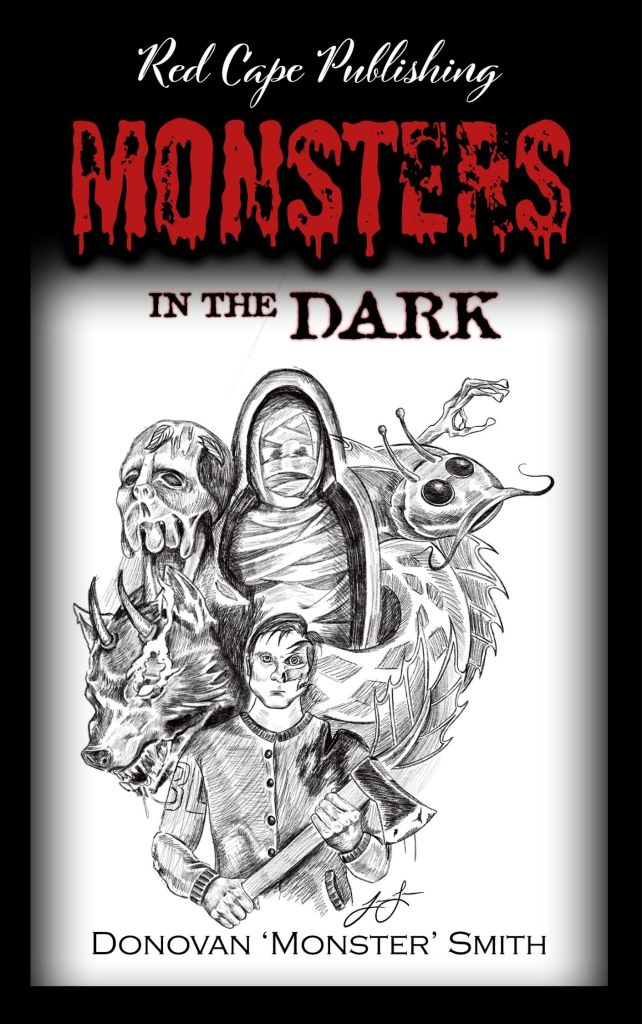
A is for Aliens is available for Kindle, in paperback, and on Audible here.

Check out Megan’s author page on Amazon.

Day 20 – Hawthorn Lane by Matt Davies

Hawthorn Lane (from Sweet Little Chittering)

Matt Davies

The bus wound its way along the country lanes. It was crowded with too many people who, Veronica thought to herself, paid too little attention to their personal hygiene. She’d been unable to get a seat and was now awkwardly wedged between a fat woman and her awful children and an older man who seemed to lean into her a little more than was necessary as the bus rounded the corners of the narrow lanes. They’d had to stop multiple times for tractors crossing between the fields or sheep being herded from one place to another.

During one of these stops Veronica had spied the henge in the distance. The standing stones jutted out of the land like nails haphazardly hammered into a piece of wood by a child. As she peered at the henge, she thought she could see movement around the stones. Probably day trippers lured there by the gaudy advertising she’d seen online for the ‘Hartbridge Henge’, that the nearby town of Hartbridge splashed across the ad space of any website mentioning the area. However, Veronica, like any good journalist, had dug deeper and found that the henge had an older name, ancient even: The Chittering.

The bus pulled away and continued its journey. As The Chittering passed out of sight, Veronica slipped her hand into her bag and felt the leather cover of the journal. She ran her fingers over its worn surface, an act she found oddly comforting. A tablet or a laptop was, she knew, a far better way to keep notes, but there was something about the writing and drawing by hand and pasting clippings into the journal that allowed her to engage with her research, and the story that research revealed, on a far deeper level than she’d ever been able to before.

The heat in the bus had grown stifling and the passengers, Veronica included, breathed a collective sigh of relief as the bus finally pulled into the village of Sweet Little Chittering. As the passengers piled off the bus, Veronica paused to speak with the driver.

“What time is the last bus back to Hartbridge?” she asked.

The driver seemed to ponder his answer in the way that country folk sometimes do despite knowing the answer off the top of their head.

“We lay on extra services the day of the fete,” the driver said, somewhat unhelpfully.

“Okay, but what actual time is the last bus leaving?” Veronica politely pressed.

“Oh, nine, half nine, something like that.” The driver was clearly clueless.

“Thanks,” Veronica replied with a slight air of exasperation. She took her phone out of her bag and checked the time – 17:45. She’d have plenty of time to track down who she was looking for and still get the last bus back.

The rest of the passengers hurried towards the village green, from where Veronica could already hear the village fete in full swing. Veronica had no interest in the fete, so walked at a slower, but deliberate, pace.

As she walked, she took in her surrounds. Sweet Little Chittering was like the twee drawings on the lids of a biscuit tins brought to life. Quaint, neatly kept little houses packed along the sides of narrow streets, well-trimmed hedges and a row of small shops, including a family butcher’s and even a candle maker. Surely these people had electricity? A hint of a smile crossed Veronica’s face as she amused herself with the sarcastic observation.

As Veronica approached the village green, the crowd began to get a little denser and she had to weave amongst the people. Many clutched raffle tickets and Veronica wondered what prize could be so great, as to make people buy quite so many tickets.

An old lady stepped out and blocked Veronica’s path. “You’ve still time to buy a ticket, deary. The draw isn’t for another ten minutes!” The old lady held up a book of raffle tickets and stared at Veronica with a toothless grin.

“No, thank you,” Veronica replied politely and old the lady looked almost shocked. “Could you tell me the best way to get to Hawthorn Lane?” Veronica went on.

“Hawthorn Lane?” the old lady replied, a look of complete confusion spreading across her face.

“Yes. Hawthorn Lane.” Veronica pulled the journal from her bag and thumbed through it. “I believe it should be not far from here.” She held up the journal, open at the page of her hand drawn map of the village.

“Well, deary, I’ve lived here my whole life and I’ve never heard of no Hawthorn Lane. You must have the wrong village.” The old lady turned and shuffled back into the crowd, waving her book of tickets at anyone who wasn’t quick enough to dodge out of her way.

Veronica stood and looked at her map. The crowd swirled around her, as she tried to orient herself to the map and her surroundings. As she was doing so, she noticed an information board on the wall between the ‘Crusty Von Buns Bakers’ shop and ‘J.M. Cockcroft & Son Family Butchers’. She made a beeline for the board.

Veronica stopped in front of the board and saw, to her delight, there was a map of the village. It was badly faded and curled at the edges. The rusty drawing pins holding it in place testified to how long it had been there. She studied the map and compared it to the one she had drawn in her journal as she’d researched the village and the area.

“Looking for something? Or somewhere?” a man’s voice said from behind her.

Veronica turned to see an older man with a vacant smile staring at her.

“I’m looking for Hawthorn Lane,” Veronica said matter of factly and turned back to the board.

“Well, I hate to say it Miss. But I think you might have the wrong village. I’ve lived here most of my life and I’ve never heard of a Hawthor…”

“Here!” Veronica cut him off. “It’s here, on the map, look.”

The man peered at the map and then leant in closer. He wiped at the glass door of the notice board, as if this would change the map within.

“But…that doesn’t make any sense. I mean, that shouldn’t be there,” the old man turned and looked Veronica directly in the eye. “I mean, I’ve lived here for years and…and… that’s not been there.”

Yet, on the map, very faded, but definitely there, was written Hawthorn Lane. Indicting that it could be found in what looked like a relatively short walk from the village green.

Veronica left the man still staring at the map in disbelief. Perhaps he has dementia, she thought to herself. Why else would he have claimed to have lived in the village most of his life and then not know of a lane that was perhaps a few minutes’ walk from the heart of the village? She headed past the village school and away from the green and the festivities.

As Veronica walked, the noise of the fete faded away and the only sound was her footsteps on the pavement. As the houses began to thin out, the pavement did as well, until Veronica was walking on the edge of the road. As she walked, she looked at her hand drawn map and wrote in the location of Hawthorn Lane as it had been indicated on the map in the village. Yet still she walked and there was no sign of the lane.

Veronica checked the time on her phone; 18:20. She’d walked for twenty minutes! This could not be right. Certainly, there was no scale on the map in the village, but this was ridiculous. She tapped the screen of her phone to open the maps app. A blank screen opened with white text: No Signal. She held up the phone and saw that she had no data. Useless.

She decided to walk on but to turn back and head into the village if she’d still not found Hawthorn Lane after another ten minutes.

As Veronica walked, the landscape began to change. Overgrown hedgerows rose along the sides of the winding road, giving the feeling of walking through a maze. The sky turned from the bright spring day to a featureless milky grey. The air grew cold, there was a damp smell, and a bitter taste began to linger at the back of Veronica’s throat. She shivered.

Just as she was about to turn back, she noticed a street sign partially obscured by the hedgerows. Gingerly she pulled aside the foliage. Most of the paint had flaked off the sign leaving the bare metal, but the name was unmistakable: Hawthorn Lane.

Veronica took a step back and realised that the entrance to the lane was set slightly back so had been obscured by the hedgerows until now. She glanced back in the direction of the village. She stopped dead.

Looking back the way she’d come, things looked completely different. She could see the village green, but it looked much closer. How could she have walked for so long and yet looking back the route looked like it should have taken no more than a few minutes to walk. Also, the road had been narrow and winding, but she was now looking back in a straight line towards the village. The village that was bathed in spring sunshine, yet she stood shivering in the gloom, beneath a milky and overcast sky.

An optical illusion, perhaps? Like not being able to see the entrance to Hawthorn Lane until she was right on top of it. Veronica dismissed the whole thing. She was now wasting time and needed to press on with the reason for her visit to Sweet Little Chittering and the resident who she had come to speak with: Diana Drake. Veronica stepped through the hedgerow and into Hawthorn Lane.

She stopped abruptly as her eyes adjusted to the light, looking about Hawthorn Lane. The sky above was still the flat milky grey, but things were somehow brighter here, like a light shining through frosted glass. Hawthorn Lane resembled the other streets of the village Veronica had walked down but here things were fundamentally different.

The houses looked ramshackle. Roofs were missing slates. Paint work peeled and wooden frames rotted. The windows were grey from what looked like years of not being cleaned. Some had broken panes with filthy curtains barely visible behind. Gardens were choked with weeds that stippled out onto the lane itself. The dilapidation continued onto the surface of the lane that was pockmarked with holes and the asphalt was cracked like a dry lakebed. There was no sign of life. The lane was silent.

At the end of the lane stood a house that was larger than the rest and must have been somewhat grand in its day. However, in the same way that it was larger than the rest of the houses, its level of disrepair was also more pronounced. The structure seemed to be sagging and twisted. Held together by the climbing plants that spread from the ground up across the outer walls, obscuring many of the building’s features. Windows, of a similarly filthy state, were visible here and there.

Veronica flipped open the journal and pulled out an old photograph that was tucked between the pages. She held the photograph up, so it was in line with the house. The faded black and white image of a grand house bore the same outline as the building ahead of her. Veronica turned the photograph over – written on the back in pencil was: The Hawthorns. She tucked the photograph back into the journal and began to head towards the house.

As she walked, the crunching of her footsteps on the broken road surface was the only sound. Veronica wondered if the houses, perhaps the whole lane, was abandoned? Maybe her journey had been in vain?

Then she saw it. As she passed the second house, barely visible through the filthy window, a curtain twitched. Veronica saw the faint outline of a figure looking out through the gap. Looking out through the filthy glass, but unmistakably looking at her.

Veronica pressed on. Same at the third and fourth houses. Looming shapes at the windows.

As Vernonia drew level with the fifth house, she started at the sight in the window. The glass had been wiped from the inside and an old man’s face leered out at her. His heavily lined sallow skin, sunken eyes, and almost grey lips gave him a ghoulish appearance. Veronica made a small motion, not quite a wave, to acknowledge the man. A thin smile, more a grimace, spread across his face to revealing yellowed tombstone-like teeth. Veronica walked on.

As she drew level with the last but one house, the front door swung open. A man and woman stared at her. They were old, no, ancient in appearance. Bent backs, white wisps of hair and skin like rice paper. They stared at Veronica as they stood wavering and gripping the doorframe for support.

“Hello,” Veronica said awkwardly.

The woman made a hoarse noise, somewhere between a gasp and a groan, by way of acknowledgement. The man remained silent.

As Veronica walked past, their heads moved as they kept their eyes locked on her. As Veronica reached the gate of The Hawthorns she turned to look back. The woman peered around the doorway of the house, still looking at her. Then Veronica saw them. At every house along the lane, faces peered out from windows and doors that were barely ajar. The whole lane was looking at her.

Veronica paused. A feeling of unease swept over her. She wanted to flee. To run out of the lane, out of this strange, decayed place, and back towards the village.

No. She had come too far to be put off by some backward locals. She lifted the gate and pushed, the rusted hinges groaning in protest. Pushing past overgrown plants, Veronica reached the front door and knocked. She looked back up the lane. Still, they stared.

The front door jerked open causing Veronica to jump. Another ancient face moved into the light. The man was similarly stooped and frail, like the man and woman Veronica had seen in the other house.

“Yes?” a rasp of a voice escaped the man’s lips.

“I…erm…I’m looking for a Diana Drake? I believe she lives, or lived here?” Veronica smiled, more to try to put herself at ease than anything else.

Without taking his eyes off Veronica, the old man let out what was almost a cry, “Diana! Visitor!”

Veronica heard movement from within the house. An old woman lurched into view behind the man. She limped heavily but stood erect and held her head up to look Veronica in the face. Long grey hair framed her lined face and piercing blue eyes met Veronica’s gaze. There was clearly quite an age gap between her and the man.

The woman pushed past the man who shrank back into the house.

“Hello?” the old woman’s voice was clear and firm.

“Diana Drake?” Veronica enquired.

“Yes. I’m Diana, what can I do for you?”

“My name is Veronica Jones. I’m a journalist. I was wondering if I might be able to ask you some questions? About something I’ve been researching?” Veronica held out her press card.

Diana’s eyes flicked from Veronica’s face to the card, and then fell upon the journal Veronica still held in her other hand.

“You’d better come in then,” Diana smiled, then her gaze moved past Veronica and her brow furrowed.

Veronica looked back over her shoulder, and she just caught sight of the other residents of the lane darting back behind their doors and curtains. She turned back to Diana, who still smiled.

“Don’t mind them,” Diana reassured her. “We don’t get many visitors down here. Come in.”

Diana turned back into the house and Veronica stepped after her. The old man was now nowhere to be seen. Veronica paused for one last look down the now deserted lane and closed the front door behind her. She followed Diana into a large sitting room.

The room was dated and dusty, a musty smell hung heavy in the air. Diana moved to an armchair and lowered herself, stiffly, into the seat. A slight grimace of pain crossed her face. She must have been very beautiful in her youth, Veronica thought as she sat down in the chair opposite.

“I’d like to ask about…” Veronica began but was cut off.

“A drink?” Diana asked.

“Oh, erm, no I’m fine. Thank you,” replied Veronica.

“Tea?” There was an odd edge to Diana’s voice.

“Well, yes, thank you. If it’s not too much trouble?” Veronica didn’t want to waste time but equally needed to engage with Diana.

“No trouble, dear,” Diana’s gaze was fixed on Veronica. “Terry? Tea for two!” Diana called out.

“Yes dear,” came the muffled reply from another room.

Diana settled back in her chair. “What did you say your name was again?” she asked.

“Veronica Jones. I’m a freelance journalist,” Veronica replied, “I’ve been researching this area and wanted to ask you some questions, if that’s okay?”

“Well, I’m not sure what I could tell you that would be very interesting, dear?” She couldn’t put her finger on exactly why, but Diana’s words didn’t ring true to Veronica.

Diana motioned towards the journal. “I thought all you young people used your technical gadgets now? No more writing things down?”

“Oh, this?” Veronica held up the journal.

“Yes. That,” said Diana.

“Well, this is part of the reason I’m here.” Veronica opened the journal to its front page and held it up for Diana to see. “I found this journal in an old bookshop. A journalist named Murray seems to have started writing this in the 1950s but the dates get progressively muddled.” Veronica turned the first few pages revealing handwritten notes in fountain pen ink.

“Murray’s mother was originally from Sweet Little Chittering,” Veronica continued, “and as a child he would come back with her to visit. Over the years it seems he got to know a lot of the children in the village. Later, when he was older and working as a teacher, he came back to visit again. What he found was very odd.”

Veronica looked at Diana for some sign of a reaction, but the old woman sat attentively yet without giving away a hint of emotion. Veronica continued.

“He found that some of the children he knew from growing up, who would at the time have been young adults, were missing…”

“Missing…” Diana seemed to be affirming the statement rather than asking a question.

“Yes, missing. They’d disappeared and seemingly without a trace,” Veronica explained.

Diana showed no sign of a reaction and silence filled the room.

“Ah, Terry.” Diana looked towards the doorway.

The old man, Terry, was shuffling in with a tray. Precariously balanced on the tray was a tea pot along with two cups and saucers. Terry was so frail that it looked as if he could barely hold up the tray and walk.

“Let me help you…” Veronica began to rise from her chair.

“He can manage.” Diana’s words cut through the air like a knife.

Veronica looked at Diana and then back to Terry who continued to shuffle through the room. All the time the tray looked like it would fall from his grasp at any moment. Finally, and seemingly with great relief, Terry set the tray down on a side table. He turned to Diana and motioned towards the tray.

“Leave it. I’ll serve.” Diana’s tone sounded like it would be better suited for a command to a dog, than to a human companion.

Terry shuffled out of the room. Diana watched him go and began to rise from her chair. Again, a grimace of pain crossed her face.

“Would you like me to…” Veronica began but Diana silenced her with a raised finger.

“I can still manage,” Diana said bitterly. “It’s not old age itself that will do you in. It’s giving into old age that seals your fate.”

Diana crossed to the tray and began to pour with her back to Veronica.

“Murray, you say, that was his name?” Diana asked, not turning.

“Yes. Murray. I think he’d have been about my age, mid-twenties, when he began the journal,” Veronica replied.

“I don’t remember anyone called Murray. Why have you come to talk to me?” Diana turned to Veronica and held out the cup and saucer. Steam curled into the air from the freshly poured tea.

“Because he mentions you, by name, in the journal.” Veronica let the words hang in the air and noticed, just for a moment, Diana’s jaw tighten and her outstretched hand twitch, causing the cup to shift slightly on the saucer.

Veronica took the cup and saucer, resetting the cup as she took it. Diana seemed lost in thought and then headed back to her chair.

Settling herself back into the chair Diana asked, “And what did this… Murray, have to say about me?”

“It’s not just about you,” Veronica set the cup and saucer to one side and leafed through the journal. “Your family, the Drakes, have been in this area since medieval times. Correct?”

“Some say maybe even before that,” Diana replied with a slight smile.

“Murray had researched back and found fragmented records of the Drake family holding a sort of ‘spring festival’ here. Over time I believe that’s evolved into the village fete that’s being held today.” Veronica continued, “Murray was starting to draw a link between some of the elements of the old ‘spring festival’ and the disappearances in the 1950s.”

Veronica looked at Diana, who stared back.

“What has this to do with me? You said I was mentioned by name,” Diana asked firmly.

“Yes, but this is where Murray’s dates seem to get muddled. Murray writes,” Veronica thumbed on a few pages in the journal and continued, “that he spoke with Diana Drake, and she told him that as part of the spring festival families in the area would be obliged to send young family members to work on the Drake’s estate. However, not all the family members would return. This bit is still unclear to me, but he writes that the families forgot their loved ones had even existed.”

“Forgot?” Diana questioned.

“It doesn’t really make sense and oddly this is where Murray’s part of the journal ends,” said Veronica.

“Murray’s part?” Diana asked.

“Yes, you see, I was so interested in this story that I carried on his research and his journal.” Veronica turned a page and held the journal out to Diana. The flowing handwriting in fountain pen ink gave way to a modern handwriting in ballpoint pen. “It’s been difficult to piece together as there are very few records, but I’ve been able to map out what look like regular disappearances in and around Sweet Little Chittering, going back hundreds of years. Mentions of the Drake family persist throughout but drop off in the early twentieth century. In fact, almost all references to your family seem to stop around then. Do you know why that is?” Veronica looked at Diana.

“Times change. The importance of landowning families dwindled as people moved to the towns,” Diana mused. “In a way, we’re a relic of a forgotten age.”

“Do you know anything about the spring festival or the history of the village that you think might be relevant? Do you remember any disappearances?” Veronica started to press.

“Wouldn’t there be police records of disappearances that you could check?” asked Diana.

“I’ve checked, there’s no record of disappearances, but there are a few scattered reports of the police following up on claims made by people outside the village. Murray included,” replied Veronica.

“And what do those reports say?” Diana asked.

“That when the police followed up, there was no record of the people who’d been reported missing. Nothing at all. Murray pushed for them to do house to house enquires and no one in the village remembered them. But Murray did,” Veronica said.

“Sounds like your Mr Murray was a bit of a crackpot, dear,” Diana replied with a smile.

“No. I don’t think so. There are records before Murray that have the same pattern. Not many, but enough. Someone from outside the village reports a disappearance but no one from the village recalls the person even existed! Murray claims he spoke to you, Mrs Drake…” Veronica was cut short

Ms Drake,” Diana corrected with a steely gaze.

“Sorry, Ms Drake.” Veronica held Diana’s gaze. “Murray claims he spoke to you, and you gave him information about the spring festival. Do you know anything that might help me?”

“Why do you say Murray’s dates were muddled?” Diana asked

“It’s less his dates and more his timeline because he describes you as being in your fifties when he spoke to you, and I can’t find a record of another Diana Drake. Here or anywhere else.”

“I’m old, but not that old,” Diana chuckled. “I’m sorry I don’t remember any Murray. As for the spring festival, you seem to know more than me. Yes, the Drakes have been in this area for a long time, but as for disappearances, I really don’t know.” Diana started to get up. “If you’ll excuse me, I must go and powder my nose.”

As Diana limped from the room she called back, “Drink your tea, it will get cold.”

Veronica picked up the teacup and drank. Perhaps this was a wasted journey. Diana didn’t seem to know anything. But Veronica still had a nagging feeling that there was more to this. She stood up and stretched, the armchair was more uncomfortable than she’d realised.

Veronica looked around the room, a layer of dust covered everything. She walked over to some framed photos on the wall. One caught her eye because it had a handwritten note across the top. She looked closer.

The photograph was black and white, it showed the village green looking pretty much exactly the same as when Veronica had walked through it earlier, but the clothes of the people showed that it was taken in the 1940s or 50s. Clearly the day of the village fete. A woman stood in the middle of the photo but, oddly, she was out of focus, or rather, her face was. Veronica read the handwritten note and froze:

Ms Drake, thank you for all your help, Terry Murray.

Veronica held up the first page of the journal. It was the same handwriting, perhaps even written with the same pen! She stared at the woman in the photo, out of focus, but slowly the image became sharper. It was Diana Drake. Younger than today, but still maybe in her late forties.

Veronica stepped back and stumbled. The room began to spin as if she were drunk. She dropped the journal and steadied herself on the arm of the chair. Her legs gave way, and she shrank to her knees. She put her hand on the side table to stop herself falling further and noticed that Diana’s teacup was empty.

“I was worried you hadn’t drunk enough,” Diana stood in the doorway looking down at Veronica.

“What…?” Veronica tried to get the words out, but her speech slurred into nothing.

Diana walked across the room and picked up the journal, fanning the pages with her fingers. She sighed.

“What a palaver! Was a time when a tribute was just offered up. Now we have to lure you in,” Diana said, as if to herself.

“I didn’t think Terry’s idea would work, but here you are.” Diana drummed her fingers on the cover of the journal. “An enquiring mind will come, he said, and come you did.” Diana turned to look at Veronica.

“People will…” Veronica slurred.

“People will come? People know you’re here?” Diana laughed. “Oh, I’ve heard it all before, dear. From many tongues, in many tongues, over many, many years.” Diana allowed herself a moment for her mind to wander.

“If I can keep those weak-minded villagers from even knowing we’re here, I can certainly make them forget about you,” Diana snarled.

Veronica rolled onto the floor and lay on her back, unable to move.

Diana knelt next to her and took her hand. Raising it to her lips, she bit down hard, breaking the skin. The pain was excruciating but Veronica couldn’t even make a noise. Diana let Veronica’s bloody hand drop from her mouth. Diana was panting.

“It renews the body, as it will renew the land,” Diana exclaimed with a note of ecstasy in her voice.

Veronica’s vison grew dark.

***

Terry Murray busied himself arranging the glasses on the table in the garden, careful not to spill a drop of the precious liquid. He looked about him. He was sure he was alone in the darkness. He lifted a glass to his lips, letting the iron rich smell fill his nostrils. He drank hungrily.

“Greedy!” Diana’s voice cut through the night air. Murray turned to face his mistress, terrified.

Diana stalked from the shadows of the house like a panther. Her jet-black hair making her blend into the night. She stopped and ran her hands down her tight, lithe body.

“Still, I can’t blame you.” Diana looked out into the night.

“Thank you, Mistress. Sorry, Mistress,” Murray hissed.

Terry’s hair darkened and his skin tightened on his face as the blood was absorbed into his system.

“Have the others done as they were commanded? Spread this upon the land,” Diana asked.

“Yes. Mistress! It has begun!” Murray motioned to the house and the garden.

The structure of the house sagged no more, and the overgrown foliage had shrunk back.

“It renews the body, as it will renew the land,” Diana said to herself and turned to Murray.

“You did well, the journal worked. It lured a good tribute. Drink your fill and then fetch the others.” Diana walked away as Murray gulped down the rest of his glass and then grabbed another.

Diana Drake looked out into the night sky. She heard Murry scurry away to fetch the other. It had been a long time since they’d fed. She walked towards the pyre in the middle of the garden. The reporter’s remains laid upon the top.

A firework rose into the night sky and illuminated the macabre scene. The villagers were celebrating the end of their fete. Diana smiled – if only they knew its true meaning. Diana turned back towards the house. More fireworks rose and burst; the flashes highlighted the shambling mass of the ghoulish inhabitants of Hawthorn Lane entering the garden. They shuffled to a halt and bowed their heads as they saw Diana.

“A tribute has come and been taken. It renews the body, as it will renew the land,” intoned Diana.

“It renews the body, as it will renew the land,” wailed the assembled mob.

“DRINK! Drink and be renewed!” commanded Diana.

Aged, claw-like hands grabbed at the glasses as the feeding frenzy began.

The now youthful Murray stood beside Diana and surveyed the scene.

“What now, Mistress?” Murray asked.

Diana smiled.

Sweet Little Chittering is coming October 29th and can be ordered now for Kindle

Day 19 – Berserker: Green Hell, Chapter One, by Lee Franklin

Chapter One (Berserker: Green Hell by Lee Franklin)

Hell?

Why had I come back?  I asked myself for the millionth time. Because you’re a coward,  came the familiar answer. Because I’d returned willingly to this purgatory, and trudged up and down all nine rings of Dante’s Inferno. Trust me, I wish it was the pit of fire and brimstone the preachers all promised.

I wish it was a place you could leave, or a nightmare that would leave you—but it’s not. Hell is an endless green; broken only by deep shadows, white blankets of rain, and cesspools of bog and mud. It’s a thick, viscous heat that rots body and mind with incessant, stagnant decay and the odour of sweating men—and that’s so bad we can’t even stand our own stench. This is where we are: in Hell—or Dia Nguc  as they call it in Vietnam.

A lot of us blokes got the call up—but I signed up.

The first time was to win Jenny’s family’s respect. The second time was because that didn’t work and, well, I had nowhere else to go because I’d lost my place at University. Mostly, though, I couldn’t handle watching Jenny’s belly grow with my best mate’s baby.

Bullets don’t give a shit what colour skin you got, and for all its sins the military doesn’t give a fuck either; you’re just a number they will chew up and spit out regardless.

Swirling black spires of smoke could be seen from six klicks out—that’s kilometres for the civilians. Within two clicks it penetrated the jungle with long, reaching fingers and we could taste the oily ash of it in our mouths. Burning bamboo, rice paddies, gunpowder, and the subtle, distinct smell of burnt flesh thickened in my nostrils as we swept in from the outskirts of the village.

It was the rice paddies we saw first; black, smouldering ash with a sheen of oil marbled on top of the water—green crops wouldn’t burn without it. The Viet Cong didn’t have oil, or flamethrowers, to waste on crop fields. We spread out wide under Hammo’s instructions, close enough to see each other through the smoke, with bandanas pulled up over our faces so we could breathe.

We were a handpicked group of specialists—

unwanted oddities in reality—and we rolled in to do our job, which was to try and make sense of this shit storm.

The brutal, dry heat of the fire battling with the humid air sapped our strength as we sloshed around the edge of the paddies looking for the road in.

There’s always a road in.

We didn’t expect any action, of course; we were just The Ghosts, The Reapers.  We were unofficially attached to whatever grunt/infantry unit was in the area, and reported informally to some unofficial JAG team. Our job started after the bullets stopped flying; we went in to collect dog tags, MIAs, KIAs, and inspect for any potential war crimes. The whole fucking war was a crime if you ask me, but nobody ever did.

Lance Corporal Azzopardi dropped to his knees. We all followed like we were in a Mexican wave. Wog-Boy, like me, was into his second tour. You could tell by the lines of disgust and profound sadness carved into his face, the way his eyes narrowed in a perpetual squint of shrewd analysis—but mostly it was the trembling, always the trembling. As I made my way over, his fingers pointed toward the ground. “What is that, Pinny?” he asked me.

Now, I’d spent all my summers with my Mother’s mob—the Wardandi people of the Noongar Nation. My Uncle Miro taught me to track with my cousins, which became my specialty and my VIP invite to this particular shit-party. We Aboriginals aren’t known for much more, perhaps drinking and football.

Wiping the sweat out of my eyes, I watched as the jumps and jitters ran down my comrade’s arm to the muddy earth as he pointed to a significant depression in the boggy ground.

Studying it carefully, I replied, “That there is a bloody large U.S soldier, Wog-Boy—see the typical GI boot tread? Going on the length of the print, he must be close to six or seven-foot-tall and maybe around one hundred and twenty kilos—weight is hard to gauge in this bog. Thank God he was running away from the village.” I cast about for further prints but was unable to find anything obvious in the smouldering marsh. “Are Yanks meant to be in this area?” I asked, “I thought they were further north?”

Americans made me nervous, and with good cause.

On my first tour, back in ‘66, I’d been detached to an in-country training wing to instruct the scouts on tracking techniques. I’d just come out of the latrines one evening when I heard shouting around the back. Being a nosey bastard, I poked my head around the corner to see some LT and a group of cronies surrounding some poor Negro who was kneeling on the ground.

The LT was forcing him to lick shit from his boot.

I didn’t have any rank to pull to stop it—but I did have a fist-sized rock.

I lobbed that rock over my head and heard it clatter on the tin roof of the septic tank. I called out grenade! and watched as everyone threw themselves to the ground. In any normal situation, nobody would fall for that ruse, but in Vietnam, everyone was twitchy. Hell, I almost dropped to the ground myself.

The LT, Karey, (I found out his name later) stumbled and fell through the roof of the septic tank—eat shit indeed, sir.

After that, LT Karey’s victim, one Sergeant Marcus Hawkins, and I became best mates—until he left the war two months later after friendly fire took a chunk out of his leg.

Karey, on the other hand, eventually went to prison for war crimes after taking the lead role in a village massacre.

Marcus and I would write letters to each other; he just loved to fill me on all the happenings back home. It was Marcus who told me that the year after, when the M16s got handed out, some three hundred yanks had been killed by friendly fire—that’s in one year! There’s the consequence of armed, untrained conscripts burning their boredom and demons with a heavy mix of drugs and alcohol.

While I continued casting around for more prints, Taz squelched in behind us on his short, stumpy legs. He pushed his thick glasses up on his piggish nose, and I heard the click and grind of the camera as he wound on the film. It was a top of the range Minolta SLR—provided by the JAG—and thankfully the only kind of shot we’d heard that week.

Taz was a long way from shooting family photos at the local shops back home in Tasmania. Flat feet had him running errands for the Head Honchos back in Nui Dat until our last guy kissed a mine—then Taz got re-posted to the Reapers.

It’s a hard task out there for any desk jockey pogue, but Taz took it all in his stride. Pushing his mop of black hair out of his face, he had Wog-Boy stand next to the footprint for reference.

We were an odd mix, but it worked as well as it had to. None of us were sure what we were achieving, or even what we were really doing out there. But we were keeping someone up top happy, and I had a paycheck, so that was just fine with me.

There were no more prints, certainly nothing definite I could make out in the slush of ash and mud. I gave Wog-Boy the sign and we all continued moving on.

Even though that monster footprint was headed in the opposite direction, my hand gripped just a little tighter on my rifle. Why would a bloke that big run away from a fight?  I asked myself.  Because something bigger, or meaner was on the other team,  came the unwanted reply.

It didn’t take long for us to find the road in. It was not really a road, more of a wedge of dirt between the paddies that was just wide enough for a cart. We rolled in single file and approached the wrecked remains of the village. I immediately got to work and started casting about for any prints or tracks that could tell us a story.

Some huts were still burning, and amidst the normal miasma of death and fire there was a strong smell of bleach in the air. I had noticed it before at previous sites, but this time the acrid stink was that much stronger.

We didn’t normally hit a site so soon after the main event and it had us all on edge, so we moved fast. I cast about and indicated to Hammo and Taz the familiar GI tread in the churned up mud and mess around us. I estimated at least ten soldiers had been through the village, clearing out each building as they went.

“Hammo, Taz, come take a look at this,” I called over, confused by what I’d found.

“What is it, Pinny?”

“Are US Marines in the habit of taking their boots off and running around barefoot?” I indicated a clear trail of prints belonging to someone—or something—that easily reached over six feet tall and about one-fifty kilos.

Hammo removed his glasses and wiped them semi-clean on his filthy shirt. “What the fuck? This doesn’t make sense.”

“Look, there’s more,” Taz called out as he set his camera off snapping and grinding.

I followed the trail but there was no discernible pattern to it. While the GI boot prints were like following the yellow brick road—predictable standard operating procedure—the barefoot prints were chaotic and cut a winding, looping trail through the carnage of the village.

By now, I’d identified that there were at least two, maybe three different prints—each one running, jumping and walking sporadically. I chose one to follow and threaded my way through the village, trying to recreate the movements. I kept tripping up on arms, legs, and largely unidentifiable body parts that were strewn about the place. Corpses decorated with their own long, coiling viscera lay still in stagnant, muddy piles—one sat propped up against a pig’s pen, a dark black and red void where his jaw had been torn from his skull. The hairs on the back of my neck prickled up.

I followed the tracks into a hut. I felt a crunch under my foot and I gazed down to the hard-packed mud beneath my feet. A scream caught in my throat. It was the body of a baby, too small to have been born, its tiny head smashed open onto the dirt.

My stomach rolled and I turned to vomit in the corner of the hut’s remains. But I couldn’t stop myself before the bile arced in the air and splashed onto the body of the infant’s mother. Her stomach had been torn open and swarms of fat flies converged on the congealed blood in a convulsing wave of black. On her chest, there were two large, weeping red wounds where her breasts had been sliced off.

“Holy Mother of Christ,” Doc moaned as he stepped forward to close the mother’s glassy eyes—her poor face was contorted in terror. I watched as he scraped up the remains of the infant the best as he could and laid it gently in her arms. Doc had been a Priest back up in Queensland; he crouched next to the bodies for a few moments to whisper a prayer and pay his respects of sorts. Doc was a good man, gentle—an old soul, as my father would say. He clung to his God with a vice-like grip in the jungle, never once rising to anger or hopelessness. He had the same powder blue eyes as my old man, and that self-same anguish burning at their core. I recognised the grief. It was buried deep away to be dealt with another time—or perhaps, as in my dad’s case, never.

I put my rifle down and laid my hand on Doc’s shoulder in the way of support as I tried to find words to console him. As usual, I came up with nothing. As with most blokes of my generation, talking about our feelings just wasn’t a thing.

“I know in war people die, soldiers die—and die badly. I expected that. But this? This isn’t war, this is madness.” Doc spoke so softly I only just caught his words.

“It’s madness alright, Doc, and it’s getting worse the further north we head. This is the third village we’ve seen like this in as many months. Ain’t nothing much you and I can do about it—if this is what they do to their own people.” I tasted the bullshit in my own words.

Doc shot me a look as he stood up and peeled off his rubber gloves. The sweat that had pooled in them spat across the room. “You really think this was the VC?”

I couldn’t meet his eyes so I stared at the horizon instead. I recalled the scuffle of prints outside, and unless the VC were wearing size ten GI boots, or had doubled in size overnight, then no. “Fuck man, I don’t know.” I hawked a wad of smoky phlegm from the back of my throat out through where the hut door had once stood.

“Why would the US be doing this shit, man? It doesn’t make any sense.” Doc swung his arm out around at the village as he walked away. “This isn’t war. This is just mindless bloody slaughter.”

Our section head, Hammo, sent us out in pairs to clear what remained of the huts. I had seen enough and looked no closer than I had to. Puddles marbled with blood and mud told a story that was no fairy tale.

Everyone I found was dead—violently dead. It was not the kind of death that women, young children, and old men should suffer. It was a massacre.

What remained of the bamboo huts had been peppered with rounds. I pocketed a few casings that belonged to AK-47s, and some I didn’t recognise.

We cleared what remained of the huts. Doc followed through behind us, checking pulses—if there were places on their bodies left to check, that is. A few of the bodies had been shredded by gunfire, but most had been butchered.

Eyes burnt into my back, somebody—no, something—was watching, waiting. The mood grew dark and ugly amongst us as we all picked up on it. And, as usual, there was nothing we could do. Nothing we were meant to do, just gather pieces of a puzzle for some other schmuck to piece together.

An explosion from behind us made my guts lurch before I heard it. I was hot on Doc’s heels, all eyes out, as we swarmed towards the position. We found Hammo limping away from the dust and smoke.

“Booby-trap,” he grunted. He clamped his hands over his ears as blood trickled out onto his jawline. With his coke-bottle lenses cracked and knocked askew, he winced in pain as he showed us all the mangled flesh of his calf.

“Well, that’s a one-way ticket home, Hammo.” Doc sighed as he threw his medic kit on the floor and set to work.

A sudden rattle of automatic weapon fire broke out in the village; bullets whined, thumped and tore chunks out of the wreckage around us.

Launching ourselves into the quagmire of mud and gore, we searched desperately for any form of cover.

I saw a flash of blonde hair as Snowy popped his head up first. A bullet kicked up dirt in front of his face just before he rolled away. I watched him indicate two shooters: nine and eleven o’clock. I passed it along the line before I crawled towards a pile of bamboo to take cover.

Hammo and Chook were well back with Doc, who was bandaging Hammo’s gaping leg wound the best he could with his stomach flat to the ground.

Chook squelched and fired off into the radio.

Wog-Boy waved at me from the remains of a hut across the way; he had Stevo and Macka tight on his ass.

Snowy was behind the hut. Taz and Cam crouched behind me on my left hand-side, flat up against the side of a pig pen.

Stevo and Macka shuffled forward under our covering fire so they could use the M60s to full effect.

The SLR kicked my shoulder like a donkey in retort.

A blood-curdling cry broke out, and in the corner of my eye, I saw Snowy getting pulled in under a bamboo screen. He was kicking and ramming his rifle at someone behind him, but just couldn’t shake him. I started to make my move over to him when I heard Taz scream out, “GRENADE!”  over the  ratta tatt tatt of the rifles.

As I hugged the dirt, the explosion punched my insides, and I lay there unable to breathe. White dots flashed over my eyes as I watched Snowy’s mop of white-blonde hair get pulled below that screen. Helpless, I couldn’t breathe, and I couldn’t move. A hand grabbed my shoulder and dragged me back to the side of the building just as a bullet bit the dirt in front of me. My stomach unravelled, and I was able to grab a mouthful of air. Within seconds, despite my aching ribs, I was back to it, and I watched Wog-Boy and Taz scramble over to help Snowy.

I leaned against the hut, still trying to catch my air. I couldn’t believe my eyes when a mountain of a man sprung out of the haze of smoke. He screamed with bloodlust, and his lips peeled back to reveal a set of chipped, stained horse-teeth. The whites of his eyes glared as he tore towards us with his body jerking as our rounds slammed into it.

Without pause or hesitation, the big guy flew straight into Cam’s unsheathed bayonet. At close to six foot, and one hundred kilos of hard, rugby muscle, Cam was not a small fella, but this man—this aberration—bulldozed through him and his bayonet like they weren’t there. He drove them both into the ground with a massive thump of flesh.

Cam grunted in pain as I ran over to heave the other man off him. I could see the tip of his bayonet poking through the man’s lower back, and the multitude of red flowers blooming on his shirt where he’d been shot— but he was still trying to choke Cam to death with his huge, meaty hands. I lifted my rifle and fired two shots straight into the side of the big man’s head—that finally did the trick!

I wiped his blood off my face and checked on Cam.

Blood splattered, pale, and gasping for breath, Cam gave me the thumbs up as we stared in shock at the soldier.

He was Vietnamese, and dressed in rags like a farmer; as with any of the Vietnamese we encountered, he could easily have been from either side. He was ludicrously massive for a local—who would typically average five foot nothing and fifty kilos soaking wet.

The footprints must’ve belonged to him.

The man’s face was a picture of devastation. It was torn, shredded, and threaded with half-healed scars—those landmines were a bitch. It was the stink of him that turned my guts inside out, though. He smelled like someone had just shat in a bowl of straight bleach.

Shaking my head in disbelief, I helped pull the dead weight off Cam. I then raced off to where I last saw Snowy with Wog-Boy and Taz.

Snowy was curled up in a ball in the corner of the trench where he’d been dragged. He was soaked in blood, and I saw his bayonet slick with the stuff and shaking in his hand.

Wog-Boy lay exhausted with blood splattered on his face and massive welts on his forearms where his rifle sling hung around their attacker’s throat. It looked just like he’d had garrotted the Vietnamese guy until Taz could make the killshot with a double tap to the head.

As with the other guy, this one was unusually large for a Vietnamese; he was punctured with at least ten stab wounds from where Snowy had stuck him like a pig. His ugly-ass face also looked as if it had been kissed by the same landmine as the other big bastard.

“He wouldn’t die, he wouldn’t die,” Snowy repeated as his blue eyes blazed with shock in a stark contrast to the thick curtain of blood that coated his hair and face. I pulled him out of the hole. Wog-Boy wriggled the bayonet out of Snowy’s grip while I called out for the Doc.

“Wog-Boy, we gotta evacuate now! Let’s hustle!”

Hammo roared. “The bastards are going to light us up—the Yanks are coming in.”

Ice-cold sweat broke out down onto my back. With was no time for questions, it was time to haul ass. I grabbed Snowy by the shoulder, pushed him forward, and shouted at him to run. We then followed Hammo, who was draped between Macka and Stevo. Chook took the lead back through the paddies towards the treeline, and made it only about five hundred meters before we heard the roar of the F100 tearing through the sky.

Where the hell had they come from so quickly? Ragged and exhausted, our adrenaline kept pushing us deeper into the jungle as we prayed we’d make it.

The air was sucked out of my lungs moments before the searing heat engulfed our bodies. Skin tingling as my nerve endings were singed, I was encased in a ball of heat…

Pain was a good sign; any burn past the nerve endings in your skin was bad news. When you felt nothing,  your flesh was melting off your bones, your body was shutting down through shock, and you were seriously fucked up. I gasped for air like a drowning man, but found nothing but hot carbon monoxide that seared my lungs; all of the oxygen and moisture in the air was instantly vacuumed up by the voracious appetite of the napalm.

Stumbling, I pulled a shocked Snowy along through the undergrowth, as the black dots that swam in front of my eyes grew larger until they dominated my vision.

Finally, I fell unconscious to the floor.

I don’t know if it was seconds, minutes, or hours until I woke up, but when I did, my skin was wrapped taut and hot over my body, and every breath rattled painfully through my scorched lungs.

Moans of agony echoed all around me. I jerked my head up to see Woody, a tall lanky fella from Intel, wandering lost through the jungle. He was only fifty meters or so behind the leading group, and his clothes had completely incinerated. All exposed parts of his flesh bore a weird look of white leather as he stumbled around aimlessly before eventually collapsing on the jungle floor.

I heard Doc flitting about, his voice low and calm as he checked on each of us. I watched his shoulders slump as he walked over to where Woody had last been seen.

Struggling to my feet, I checked out my body as I converged with Hammo and the rest as they made their way in silence. With his injured leg, Hammo had pushed Macka and Steve ahead of him and had been closest to the back with Woody. Most of his hair was burnt off, and ugly blisters covered his back. Still, he was alive and incredibly high on Doc’s precious stash of morphine. He was one lucky bastard indeed! Thank fuck they hadn’t used phosphorus in that bomb, or none of us would have made it.

Chook was about one hundred meters in front of us and had to backtrack. Never had I seen the young fucker run so fast.

“Did you call that aircraft in, Chook?” I asked.

“No. I had no chance to. Only found out they were coming because I picked up some American channel.”

I saw that his radio was still intact, and he was already calling in a situation report. His face grew even paler as he relayed information to Wog-Boy.

With Hammo doped up on morphine, Wog-Boy had suddenly found himself promoted into a complete cluster-fuck. We were on the wrong side of the valley, and the area would be inaccessible for days. With a forty kilometre trek around, we would not be making our rendezvous.

It was time for a plan B.

“Okay, boys, we’re rolling out in thirty minutes. Get your shit sorted and see Doc if you need to. Macka, Cam, I need you boys to make a stretcher for the boss man here.” Wog Boy indicated the stupefied Hammo.

“Pinny, I need you on that map. Work with Chook to find us an extraction point—or at least a medivac for Hammo. Taz, you and Snowy run an ammo and ration check, and then try finding some water. Then we’ll get the fuck out of here.”

Chook and I managed to organise the medivac. The best access for a bird was ten kilometres North West through the scrub, and to a small plateau. We had twelve hours to get there for a pickup at 0700 the next morning.

It was Hammo’s best—and only—chance. We would then have thirty-six hours and a fifteen kilometres trek south for a vehicle pickup for ourselves.

Berserker: Green Hell is available here.

Check out Lee Franklin’s website here.

Day 18 – Autumn Leaves by Donovan ‘Monster’ Smith

Autumn Leaves (from Monsters in the Dark)

Donovan ‘Monster’ Smith

A light breeze cascaded through the neighborhood, sending goose pimples up Leia’s forearm like rapid fire. She rubbed at it, trying to dispel the cold as she walked to the next house over. She’d wanted to go as one of the princesses from her favorite films but wound up being a pixie instead. It was her mother’s idea, a decision she wasn’t very happy with.

“Come on Eliah, hurry up,” chirped Leia.

“You don’t have to wait for me, you know.”

“Mom said we have to stay together,” she whined.

“I can’t believe I’m stuck babysitting,” he muttered under his breath.

“I’m not a baby, Eliah,” she said, her feelings hurt.

This was Leia’s first time going trick or treating without her parents chaperoning. They had let her go with the promise that Eliah would watch over her the entire time. Unfortunately for him, he was tasked with babysitting his seven-year-old sister, although he’d much rather have gone by himself.

Eliah was fifteen years old and looking forward to starting his freshman year in high school soon. He felt he was old enough now that he shouldn’t have to keep tabs on his little sister anymore. He had his own life to live, and he would have preferred the company of his friends.

He followed Leia up to the last house on the corner of the street, escorting her to the front door. There were spookily carved jack-o’-lanterns lighting up either side of the front door, along with a bloody welcome mat for aesthetics. The owners had switched their normal light bulbs for black lights, to add to the eerie Halloween theme.

They walked up to the door, managing to avoid the flood of kids receiving their candy. One was dressed as a clown, another as a werewolf, and yet another was wearing a scary looking skull mask to compliment his jeans and plain white tee. Their buckets were overflowing with treats, and Eliah was insanely jealous.

He knew his bucket would be just as full if he didn’t have to drag his bratty sister alongside him.

They approached the door and Mr. Park opened it slowly, greeting the kids with a “Happy Halloween” and a smile.

He was an elderly veteran in his late sixties and had been a fixture in the neighborhood for nearly two decades — a lot longer than Eliah or his sister had been alive. He was stiflingly friendly and was extremely fond of the little ones throughout his neighborhood. He was always polite and willing to help with anything he could. He was slow on his feet, thanks to an injury he suffered back in his military days, and he strode with a limp, never going anywhere without his trusty old cane.

Leia smiled back. “Trick or treat, Mr. Park.”

“Well, aren’t you just the cutest little thing,” he said, all smiles. “What are you supposed to be, a fairy?”

“I’m a pixie,” she said enthusiastically.

“I see,” he said. “Well, you sure are the cutest little pixie I’ve ever seen.”

Leia giggled, and Eliah shook his head to express his displeasure at the small talk. He stuck his nearly barren pillowcase out for his share, thanking Mr. Park once they were finished. It was coming up on eight o’clock – almost time to call it quits but there were a few more streets to cover before they headed home, and Leia was excited to continue the quest.

As they journeyed to the next street over, Eliah happened to run into a few of his classmates, including Cari Worthington, the girl he’d had a crush on since middle school.

Oddly enough, she was dressed as a dancer, wearing knee-high black leather boots, a snug halter top, and the hottest skintight booty shorts he’d ever seen. His eyes bulged out of his head, like one of those old cartoon characters he used to watch on Saturday mornings when he was a kid.

He tried to play it cool, offering up a casual, “Hey, Cari.”

“Hey,” Cari replied. “What are you up to tonight?”

“Oh, nothing really, just getting candy.”

“Me too,” she said and held up her bag. “How did you make out?”

“Not too bad,” he said. “I’m about half full.”

“Yeah, me too. Jane over there, though, is making a killing. This is her fifth neighborhood tonight.”

Eliah glanced at the girl’s bag and was surprised to see it overflowing. She must have hit every neighborhood in town.

“That’s a killer costume,” he said, hoping not to come off as creepy.

“I like yours, too. What are you supposed to be?”

“I’m a mafia hitman. You like the suit?”

“Yeah, it looks good on you,” she coyly replied, and shot a smile his way. “We’re going down to the old Potter Mill right now. Wanna come with?”

“I’d love too, but…” 

“Mom said you have to stay with me,” interrupted Leia. “I’ll tell on you.”

“Shut up. Go away,” he snapped, embarrassed and hoping Cari wouldn’t make fun of him for being out with his little sister.

“I’ll tell on you,” snapped Leia.

“It’s cool if you can’t come,” Cari responded, flashing a flask full of booze she’d copped earlier from her old man’s liquor cabinet at home. “Guess we’ll have to have fun without you.”

She winked at him, saying “We’ll see you later,” and disappeared into the shadows around the corner.

It was the first time she’d ever asked him to tag along, and he wasn’t able to because he was stuck watching over his snotty little sister. He was sick to his stomach.

“Why do you always have to ruin everything?” he barked angrily. “Sometimes I wish you were never born.”

“That’s mean,” said Leia, her eyes watery and red around the edges. “I hate you!”

***

Walking down the street after hitting a few houses, Eliah noticed a smattering of insects dancing under the streetlights. The air had grown a few degrees warmer and muggy, giving him a weird vibe as they neared the end of the street. There were only two houses left to hit on Clapton Drive – the Thompsons’ and the Wicks’.

The streetlight flickered above their heads as they made their way to the last house on the street, the Wicks’. As they drew closer, Leia saw a stuffed scarecrow sitting in a chair by the front door. Having seen those sort of things before, she knew what was about to happen.

“He’s going to jump out at us,” she whispered to her brother with a smirk.

“Duh,” said Eliah, still angry at his sister. “Mr. Wick does the same thing every year.”

“You don’t have to be mean,” she snapped back, her feelings hurt once more. “You’re no fun tonight.”

“Neither are you,” he replied snidely. “Let’s just get this over with. It’s almost time to go home.”

Suddenly, as they were arguing, Mr. Wick, dressed in his fake scarecrow costume, jumped out at them.

“Arrrggggghhhhh,” yelled Mr. Wick as he stumbled toward them.

Leia was caught off guard, and she just about flew out of her shoes. Eliah had been waiting for Mr. Wick to pounce on them and scare them, and he couldn’t help but burst into laughter at the expense of his little sister. She was such a scaredy-cat, easily spooked by her own shadow.

“Good one, Mr. Wick. You scared her good,” he said, laughing.

“Shut up, Eliah,” she screamed at him.

“Now, now, children,” said Mr. Wick through the latex mask.

She stuck out her bag. “Trick or treat,” she said, her heart still pounding from the scare.

Mr. Wick grabbed the bowl of candy he’d laid out for the trick or treaters and let them each grab a handful. He wished them a goodnight and sat back in his chair, sitting still, playing possum for his next victim.

As they finished and began toward the last street of the night, Leia tripped and banged her knee.

“Are you all right?” asked Eliah.

“My knee, it hurts,” she said with watery eyes, inspecting it.

“You’re so annoying. Get up.”

“You’re the worst brother ever,” she yelled. “I hate you!”

They were rounding the block, approaching the last street of the night before calling it quits, when they bumped into Henry Little.

Henry Little was the highly disliked neighborhood bully, who was always getting himself in trouble. He was known for getting into fights and causing destruction, occasionally spending some time in juvenile detention centers.

Recently, over the past few weeks, Henry had taken a strong disliking toward Eliah. Anytime he saw Eliah around, he made a point to pick on him, for whatever reason he could make up. Eliah had guessed the reason to be that Henry was simply jealous of him.

Tonight, Eliah was completely caught off guard when they rounded the corner and ran into Henry, next to the oleander hedge.

Bugs attacked Henry’s neck, and he smacked at them like a mental patient who just escaped a hospital. One of the bugs splattered on his neck and palm, and Henry rubbed the guts on his jeans.

He spat at Eliah, hitting his shoe. “Well, look who we have here,” he said, with an evil grin spanning from cheek to cheek.

Eliah didn’t know what to do; his main concern was getting out of there as fast as he could. He didn’t want his sister around a hoodlum like Henry. She didn’t need to be exposed to someone so vile.

“What do you want, Henry?” asked Eliah impatiently.

“Looks like I hit the jackpot tonight,” said Henry, laughing manically.

“What jackpot?” asked Leia, catching a nudge from her brother.

Eliah glanced down at her and shook his head slightly from side to side, subtly informing her not to say anything.

“Looks like I’m going to be elbows deep in candy tonight,” Henry chuckled.

“What do you want, Henry?” asked Eliah once more, waiting for a reply.

“I want your candy, dumbass.”

“You can’t have our candy,” blurted Leia, catching another nudge from her brother.

“I can take whatever I want,” he said, laughing as if he’d just said the craftiest thing ever.

“That’s stealing,” she chirped.

“And what are you going to do about it?” he snarled, glaring at Eliah.

Suddenly there was a grumbling noise coming from their right, amongst the oleander hedge.

Out of the blue, Eliah recalled a memory from when he was younger. He was around seven or eight at the time. His Uncle Jimmy told him a nasty, quarter-century-old story about a monster that lived in the oleander hedges around town.

He warned Eliah to keep an eye out and never get too close, “or the oleander monster will get ya,” he would say. Uncle Jimmy told him that the oleander monster fed on the souls of children and young adults. He said it would eat the bodies of its victims and absorb their souls for energy.

All those thoughts raced through his mind in a matter of seconds, and he took a step backwards, remembering what his uncle had told him. He never really believed in the tales his uncle told, often chalking it up to his warped sense of humor.

***

The air flexed with anticipation, and bugs circled in droves under the soft yellow glow of the streetlight. Henry paid no attention to the sounds coming from the oleander hedge, instead aiming his aggression at Eliah and his sister. The temperature had risen at an alarming rate over the last minute as they stood there sweating.

Henry noticed beads of moisture sliding down Eliah’s forehead, thinking highly of himself. “Either hand it over, or I’m going to beat you to a pulp,” he demanded.

“Henry, come on man,” said Eliah. “Don’t take our candy.”

“Hand it over or I’m going to smash you up,” he said with fire in his eyes.

Eliah handed his bag over. “Here, take mine, but let her keep what she’s got. She has nothing to do with this.”

“Hers too,” said Henry, puffing out his chest. “Hand it over.”

“No. You can’t take hers,” said Eliah.

“Your choice,” said Henry, and he swung at Eliah.

His fist connected with Eliah’s cheek, and immediately Eliah clutched at the side of his face. His cheek swelled instantly as his face turned bright red.

“What did you do that for?” cried Leia, concerned for her brother’s safety.

“Hand it over,” demanded Henry.

Leia lowered her head, disgusted at the bully, and stuck her bag out for Henry to take. There was nothing she or her brother could do about the situation. It was beyond them. Henry reached for Leia’s bag, when all of a sudden the bushes started moving.

Eliah let go of his face and watched as something breached the hedge, covered in leaves. It was thick and slimy, with dying yellowish green leaves plastered to it like some otherworldly sculpture. Henry had his back to the hedge and couldn’t see it stretching for him. Leia saw it coming and stood there slack jawed, staring at the thing in awe.

Without warning, the thing grabbed a handful of Henry’s shirt, yanking him into the oleander hedge. Henry screamed at the top of his lungs, but there was no one in sight to help. He kicked and punched at the thing, trying to get free.

“What the fuck?” he yelled. “Help me! Help me!”

The thing drug him into the oleander hedge, disappearing amongst the leaves. Eliah couldn’t help himself and just had to see what grabbed Henry. He parted the hedge and peered in, trying to get a clean look at the thing.

It was made up of gooey grey mush, with leaves stuck to it like skin. Deep crimson, vine-like veins twisted all over, just under a layer of leaves. Eliah watched as the thing opened its slimy, saliva-drenched mouth and bit down on the top of Henry’s head.

There was a sickening crack as Henry’s skull was split open by the monster’s powerful bite. It chomped and chewed on the skin and bone, smacking its mouth, enjoying the delicious meal. Eliah was mesmerized and couldn’t seem to pull himself away.

Henry’s left eye opened, looking right at Eliah, as he gurgled and choked on his own blood. Skin and tissue fell from the monster’s mouth as it continued to eat. Henry’s leg twitched, kicking out at the air, and Eliah knew he was almost dead.

Leia managed to get her head under Eliah’s arm, wanting to see what was happening. She saw the monster and instantly started screaming. It startled Eliah, breaking him out of the trance he was in.

“Get back, Leia,” he yelled.

“Oh my god,” she cried. “Is he dead?”

“Don’t look! Don’t look, Leia! Stay back,” he said in a state of confusion.

Henry raised his arm, a final attempt to reach for help, and the monster’s mouth snapped down like a bear trap, taking a bite out of Henry’s exposed brain. It looked like spaghetti smothered in sauce, and Eliah couldn’t stand to watch any longer. He let go of the hedge and bent over, putting his hands on his knees, trying to gather himself.

Suddenly, he heard Leia screaming and turned around just in time to see her feet disappearing into the hedge. The thing had grabbed her and drug her off into the oleanders. As scared as he was, he mustered up all the guts he could and parted the hedge, searching for his sister.

The monster was holding her in the air, its dripping, gooey claws clenched tightly around her waist. It looked at Eliah, almost smiling, like it knew a dirty little secret that he didn’t. It tilted its head, as if to get a better angle, and opened its mucky mouth, ready for the next course.

“Get away from her,” he yelled in a panicked frenzy. “Leave her alone!”

“Eliah,” she said, drowsy, half conscious, her eyelids drooping.

His mind was spinning this way and that, and he had no clue what to do. But he knew he had to get his sister. He summoned all the grit he could and forced himself into the oleander hedge.

It felt like a sauna inside the hedge, and Eliah quickly became disoriented due to the dense humidity. Henry’s body was lying on the ground next to the monster, half eaten, discarded like a chicken bone. Half of his head was missing, and his right arm was nowhere in sight. Blood and chunks of brain matter were sprinkled all about like cookie crumbs.

He made eye contact with the monster, catching its gaze as it paused what it was doing. It had shiny yellow eyes with black, vertical pupils, like a cat. Its eyes were hypnotizing and frightening, like the eyes of some unknown ancient race. Its mushy wet skin was crawling with worms, cockroaches, and various other bottom feeders.

Eliah wiped the sweat from his brow as the insects swarmed like vultures. The monster stretched its mouth wide, taking a bite out of Leia’s neck, splashing the surrounding leaves with blood. He could see the life draining from his sister, and knew he had to do something quick.

The monster munched another mouthful of Leia’s neck and instantly her head drooped as she slipped into a state of unconsciousness. It had a voracious appetite and continued to gorge itself on the body of his sister as Eliah watched in terror.

“Leave her alone!”

The monster raised its head, staring right at him, as pieces of flesh and bone tumbled out of its mouth. It continued to sloppily chew with its eyes firmly fixed on him, never once wavering. Blood poured from Leia’s head wound, washing her face with a mixture of grey mush and sticky red liquid.

Suddenly, Eliah heard voices coming from the other side of the hedge, and his heart raced at the prospect of help. It sounded like trick or treaters on their way to the next street over, probably the last of the night. He was already late getting home, and he knew that soon enough his parents would start looking for him and his sister.

“Help!” he cried out, but there was no response. “Someone, help me!”

He turned back just as the monster took another chunk out of Leia’s neck, dripping blood like gravy.

The thing was hideous, a forgotten obscenity, an abomination of mankind. It roared at him with an unquenchable, ravenous hunger that couldn’t be satisfied — no matter how much it ate.

There was nothing left he could do for his sister; she was already dead.

He turned to leave, fearing for his own life, not wanting to be the creature’s next feast. As he tried to exit the hedge, ruffling and squishing sounds drifted over him like a lullaby. He glanced over his shoulder one last time and saw the atrocious monster, two feet back. He grabbed at the hedge frantically. Just as his hands touched the leaves, he was yanked backwards into an infinite darkness.

***

Red and blues lit up the street as men in uniforms meticulously raked over the crime scene. Cones were placed at either end of the street, blocking any traffic, and yellow caution tape surrounded the oleander hedge.

“Hey Pranke, come take a look at this,” said one of the officers.

“Damn Jameson, I’ve never seen anything like that before,” replied Officer Pranke, parting the hedge.

“I’ve got a child over here; a female,” said Officer Jameson, inspecting the body.

“I’ve got two more over here; males, teenagers,” said Pranke, wiping the sweat from his face. “One’s missing a head. Anyone see a head around here?”

“Look at this,” said Jameson, touching a slimy grey spot on the shirt of the headless body.

Officer Pranke started toward the street, when suddenly there was a ruffling behind him. Out of the corner of his eye, he saw something coming at him, followed by a sloshing sound.

Monsters in the Dark is now available for Kindle and in paperback here. Coming soon to Audible.